2007年9月7日星期五

ALL ABOUT HKAFF

香港亞洲電影節 (HKAFF) 從 2003 年的前身「點解獨立咁過癮?」搖身一變,在這短短 4 年間成為一個選映了近 80 部電影,共 63 個節目的電影節,是目前香港最大型的亞洲電影節目,一個匯聚亞洲電影新力量的平台。

HKAFF 由致力推廣獨立電影的本地藝團「影意志」和「百老匯電影中心」共同策劃,繼續推動本地獨立電影、支持原創精神。今年更從去年 42 個節目,擴展了 50% ,新增了「中國電影新世代」、「亞洲經典」、「午夜狂熱」、「優先放送」等多個新項目,讓影迷從多角度全方位觀賞最新鮮熱辣的亞洲電影,而重點推介的「亞洲新導演獎」,更旨在發掘亞洲新導演,當中精選的 7 部作品,全都是這批新導演的第 1 、 2 齣作品。今年我們高興見到贏得第一屆「獨立精神大獎」的香港新晉導演黃修平,以其新作《魔術男》參展,繼續發揮本土創作精神。

選片方面,我們更為大家準備了前所未有的強陣,開幕閉幕的《色,戒》、《七月好風》、《無用》都是震撼心靈的亞洲首映;此外,在海外影展大熱的《密陽》、《殯之森》、《呼吸》、《千年思憶》、《盲山》、《蘋果》、《太陽照常升起》、《出埃及記》等等,都是影迷翹首以待的作品;亦有岩井俊二寫給市川崑的情書《市川崑物語》,詩意盎然,影迷愛煞,絕不可錯失。近年中國電影愈戰愈勇,看看「中國電影新世代」便知何解,至於極少在港見面的東南亞區作品,更是彌足珍貴,推介的《色,禁》、《收數無着數》和《山村小老師》,更讓我們看到一個不一樣的亞洲國度。

今屆 HKAFF 除了戲碼增強外,我們為了加深觀眾對電影創作的認識,還特別增加了多個交流及教育的活動環節。頭炮是國際級大導李安出席的新導演論壇,與中港台新晉導演分享當初作為新導演的滋味。除此以外,我們還有賈樟柯、姜文、馮小剛、李楊、彭浩翔、林愛華以及多位亞洲新導演蒞臨現場,交流他們的創作心得,另設的李滄東、薩耶哲雷、中國新電影、賈樟柯的紀錄片講座,都是希望提供一個評論的角度,增加觀眾賞析的能力。

在這 18 天的 HKAFF 裡,希望所有參加者跟我們一樣興奮,一同感受亞洲電影的魅力!

HKAFF is four years old!

Within four short years, Hong Kong Asian Film Festival has transformed from its precursor programme “Indie Is Fun ? ” in 2003 to an event that showcases more than 80 films in 63 categories. It is the biggest Asian film event in Hong Kong and the most notable platform for bringing together new filmmaking talents in Asia .

HKAFF is jointly organised by Ying E Chi and Broadway Cinematheque, two local organisations dedicated to the promotion of local independent filmmaking. The number of categories has increased an astonishing 50% this year, from 42 to 63. New additions such as “Chinese Cinema: A New Generation”, “Asian Classic”, “Midnite Craze” and “Festival Gala” are introduced to present the latest and widest range of offerings of Asian cinema to our audience. One of our most highly valued offerings is “New Talent Award”, which is dedicated to the discovery and promotion of fresh Asian directing talents. The 7 films shown under this heading are mostly the debut films of these new directors. We are particularly delighted to feature MAGIC BOY, the second film of the winner of the 1 st Independent Spirit Award, Adam Wong, whose work demonstrates the continuing growth and originality of local independent filmmakers.

The selection of this year's HKAFF is stronger than ever: our opening film LUST, CAUTION, as well as closing films BREEZE IN JULY and USELESS stage their Asian premiere at the HKAFF. We also bring you eagerly anticipated international film festival favourites such as SECRET SUNSHINE, THE MOURNING FOREST, BEYOND THE YEARS, BLIND MOUNTAIN, LOST IN BEIJING, THE SUN ALSO RISES and EXODUS. The poetic FILMFUL LIFE by Iwai Shunji, a loving portrait of the life and work of Ichikawa Kon, is also a must-see for film lovers. The cinematic gems from Southeast Asia, rarely shown in Hong Kong , have a presence at HKAFF as well: distinctive works such as SANKARA, THE BET COLLECTOR and MANORO open our eyes to a new horizon in Asian cinema.

On top of the strong selection this year, we have also launched a series of interactive and educational events to provide a more in-depth look at the process of film production. The inauguration event is “New Directors Forum” headlined by world-renown director Ang Lee, who will discuss with new directors from mainland China , Taiwan and Hong Kong about their maiden voyages into the seas of directing. Directors including Jia Zhang-ke, Jiang Wen, Fen Xiao-gang, Li Yang, Pang Ho-Cheung, Aubrey Lam and other Asian helmers will attend the screenings of their respective films to talk to audiences about their experiences in filmmaking. Seminars on Lee Chang-dong, Satyajit Ray, New Chinese Cinema and Jia Zhang-ke's documentaries are also introduced in the hope of helping cineastes to broaden their scope of critique and appreciation.

We hope you will be as excited as we are during the 18-day events of HKAFF, and savour the best of Asian cinema !

EXCHANGE PROGRAMS:

(1) 研討會 Seminar:

華語電影薪火相傳
Chinese Cinema: Passing the Torch

近年華語電影在海外電影節越來越受歡迎,在國際舞台上舉足輕重,新一輩的華語電影導演又如何承接這股浪潮?難得《色,戒》作為今次香港亞洲電影節的開幕電影,我們很榮幸邀請到導演李安,以及多位新導演,包括《七月好風》導演譚國明和《最遙遠的距離》的台灣導演林靖傑同場出席是次討論會,由大師級前輩與電影新人類暢談新舊交替的情况,以及各自的創作苦樂。

Chinese-language films have become a force to be reckoned with in recent years with increasing worldwide popularity. Would the new generation of Chinese-language directors be able to ride on this wave and extend the popularity? Honoured as we are to have LUST, CAUTION as the opening film of this year's HKAFF, we are even more privileged to have Ang Lee and a group of new directors including Stanley Tam of BREEZE OF JULY and Lin Jing-jie of THE MOST DISTANT COURSE to join us at this seminar, which will be a dialogue between an elder statesman and new talents on passing the torch from one generation to the next, as well as to share with each other the experience of filmmaking.

日期 Date : 23 Sept 2007 (Sun)
時間 Time : 2:30-3:30pm
地點 Venue :百老匯電影中心露天空地 Open Sapce, Broadway Cinematheque
嘉賓 Guests :李安 Ang Lee 、譚國明 Stanley Tam 、林靖傑 Lin Jing-jie

(2) 講座 Seminar:

電影與文學—李滄東的創作世界
Cinema and Literature – the Creative World of Lee Chang-dong

前身為小說作家的李滄東,雖然以電影作為表達的媒體,但作品亦往往流露一種文學性。為配合是次「導演焦點」環節,我們很榮幸請來著名詩人也斯,為我們剖析李滄東的作品,讓我們細看李滄東的電影美學和文學性。

Despite the fact that novelist-turned-filmmaker Lee Chang-dong has chosen film as his medium of expression in the recent decade, his work continues to imply a distinctive literariness. To complement our “Director in Focus” retrospective of Lee's work, prominent Hong Kong poet Ye Si will talk about the cinematic and literary aesthetics in Lee's films.

日期 Date : 26 Sept 2007 (Wed)
時間 Time : 6:50-7:30pm( 《薄荷糖》 4:40pm 放映後 )
(after the 4:40pm screening of PEPPERMINT CANDY)
地點 Venue :百老匯電影中心 4 院 House 4, Broadway Cinematheque
嘉賓講者 Guest Speaker :也斯 ( 嶺南大學中文系系主任 ) Ye Si (Department Head of Chinese Department, Lingnan University )

(3) 講座 Seminar:

中國電影新世代
Chinese Cinema – A New Generation

中國電影來到了第六代,原來還有更新的新世代。今次,我們請來入圍康城影展的《盲山》導演李楊,以及入選威尼斯影展的《傘》導演杜海濱,就讓新世代的導演跟大家分享他們在中國拍片的心得,淺談內地的新電影面貌。

After the sixth generation of filmmakers came to prominence in the 1990s, there appears a new group of Chinese directors whose films defy categorisation. We have invited Li Yang, the director of BLIND MOUNTAIN , as well as Du Hai-bin, director of the documentary UMBRELLA to share with us the experience of filmmaking in China and discuss about the changing faces of Chinese cinema.

日期 Date : 29 Sept 2007 (Sat)
時間 Time : 4:20 – 5:20pm ( 《盲山》 2:10pm 放映後 )
(after the 2:10pm screening of BLIND MOUNTAIN)
地點 Venue :百老匯電影中心 4 院 House 4, Broadway Cinematheque
嘉賓 Guests :李楊 Li Yang 、杜海濱 Du Haibin

4) 講座 Seminar:

賈樟柯的紀錄片世界 Jia Zhang-ke's World of Documentary

賈樟柯以往曾拍過《公共場所》及《狗的狀況》兩部紀錄短片,去年完成《東》之後,似乎更刺激起他製作紀錄片的意欲。結果今年賈樟柯再帶著以中國藝術家為焦點的《無用》迎戰威尼斯。《無用》成為本影展的閉幕電影,我們亦很榮幸邀請到賈樟柯來港,與台灣著名電影評論家、前台北電影節節目策劃聞天祥來個 crossover ,讓大家探索賈樟柯的紀錄片世界。

Jiang Zhang-ke's has shown a penchant for documentaries in his previous shorts IN PUBLIC (2001) and DOG'S CONDITIONS (2001). After finishing DONG (2006) last year, he turned his attention to documentary filmmaking again and made USELESS which sheds light on the lives and works of contemporary Chinese artists and premiered at the Venice International Film Festival this year. As USELESS is the closing film of HKAFF, we are delighted to have invited Jiang to Hong Kong to discuss with celebrated Taiwanese film critic and former program director of Taipei International Film Festival Wen Tien-hsiang about his documentaries.

日期 Date : 10 Oct 2007(Wed)
時間 Time : 8:40 – 9:20pm ( 《無用》 7:20pm 放映後 )
(after the 7:20pm screening of USELESS)
地點 Venue :百老匯電影中心 4 院 House 4, Broadway Cinematheque
嘉賓 Guest :賈樟柯 Jia Zhangke
主持 Moderator :聞天祥 Wen Tien-hsiang

(5) 講座 Seminar:

馮小剛與戰事論述
Feng Xiao-gong's Art of War

剛出席釜山電影節開幕典禮的馮小剛,將現身 HKAFF,分享他在新作《集結號》中的拍攝點滴,與及他首次處理戰爭題材的困難、在戰爭論述中的各種問題。今次我們很高興能邀得文化評論家馬家輝主持大局,跟馮小剛走到戰爭的最前線。

Feng Xiao-gong will make an appearance at the HKAFF to present his latest film, the war epic ASSEMBLY after its triumph at the Pusan International Film Festival. In this seminar held after the HKAFF screening, Feng will share with us his experiences in making ASSEMBLY, the difficulties he met with in his first attempt to tackle the subject of war and issues that arose from depicting different viewpoints. We are glad to have cultural critic Ma Ka Fai as moderator of this talk who will accompany Feng to the frontline of making a war film.

日期 Date : 9 Oct 2007(Tue)
時間: 9:25 – 9:40pm (7:05pm 《集結號》放映後 )
(after the 7:05pm screening of ASSEMBLY)
地點 Venue : PALACE IFC 5 院 House 5, PALACE IFC
嘉賓 Guest :馮小剛 Feng Xiaogang
主持 Moderator :馬家輝 Ma Ka Fai

(6) 講座 Seminar:

經典重溫
Asian Classic

荷里活電影大家已經看過很多,寶萊塢 ( Bollywood) 大家又看過多少?但在寶萊塢之前還有一位印度電影之父── 薩耶哲雷。 今次香港亞洲電影節特備節目「亞洲經典」,就千山萬水運來了他的經典《大路之歌》。為配合放映,我們請來著名影評人馮家明為大家導讀這部驚世之作。

Although a major presence in cinemas around the world, Hollywood comes in second to Bollywood in the number of film productions each year. The commercial success of Bollywood notwithstanding, the prestige of Indian cinema was founded on the work of Satyajit Ray, the father of Indian cinema, which are the opposite of the offerings from Bollywood. In our special presentation “Asian Classic”, we will present PATHER PANCHALI, Ray's first feature that astonished the world with his artistry and originality. To accompany this presentation, we have invited famed film critic Fung Ka Ming to examine the brilliance and significance of this masterpiece.

日期 Date : 1 Oct 2007(Mon)
時間 Time : 3:30 - 4:15pm (1:45pm 《大路之歌》放映後 )
(after the 1:45pm screening of PATHER PANCHALI)
地點 Venue : bc film library (kubrick 內 inside kubrick)
嘉賓講者 Guest Speaker :馮家明 Fung Ka Ming

2007年8月25日星期六

威尼斯电影节新设“导演万岁”奖授予北野武


【共同社8月24日电】第64届威尼斯国际电影节将于本月29日在意大利开幕之际,电影节组委会23日宣布,将新设奖项“导演万岁!”(GLORY TO THE FILMMAKER!)并决定将该奖项的首个奖杯授予日本导演北野武。这一消息已得到北野所属事务所方面的证实。

新设的奖名取自本届电影节特别展出作品、北野武执导的影片《导演万岁!》的英文片名。电影节组委会在与北野所属事务所联系时表示,组委会对于北野武迄今为止在威尼斯电影节取得的佳绩、以及作为电影导演不断尝试新挑战的精神表示赞赏,故决定新设此奖,并将首个获奖者的殊荣授予北野武。北野武导演曾在威尼斯电影节上获得最高荣誉金狮奖和最佳导演奖。

关于这一新设的奖项,今后也将有适当的人选获得此项殊荣。获悉得奖消息后北野武表示:“我感到非常荣幸,我作品的名字能作为奖项名称被永远延用真的很高兴”。

2007年8月20日星期一

我与《天堂口》导演陈弈利的对话(转)


转自洪晃8/12日BLOG


陈弈利是一个没有中国经历的中国导演——他没戴过红领巾、没当过三好学生;没入团、没学军,也没在什么电影厂学徒、没给四代、五代当过副手、摄影师——这 些他都没干过。和他同龄的中国导演考小学的时候他在家里收藏《超人》之类的漫画书、开生日派对还要要求小朋友都穿成牛仔;别人入团的时候他开始过夜生活, 出去打碟、混DJ。所以他导演的《天堂口》和其它华语片彻底不一样。

但是陈弈利的模样很中国,很当代——瘦瘦的、酷酷的、文质彬彬,那种特别招女孩子同情的书生艺术家。他很准时,坐在咖啡厅,抱着一本英文书,面前只有一杯 白水和拿铁咖啡。他没什么架子,如果你喊“陈导”或者“陈老师”,他会先一楞神,不太习惯,然后才意识到是叫他。他好象还不知道在有了作品之后,这两个称 呼,在中国将代替他的名字。


问一个导演崇拜哪个导演,他们一般会兜个圈子,说点理论,然后归总到“我就是我”这种个性化的套路回答。陈弈利却一点不回避这种问题,“应该是 2004年吧,”他回忆道,“我接到一个电话,是吴宇森的制片公司打来的。他们看了我拍的一个短片,觉得不错,让我去和吴宇森吃个中饭。我当时想, WOW,这就够了,就是不拍电影,我能跟吴宇森吃中饭这已经非常不得了了,这就够了。” 他说他是看吴宇森、李小龙的电影长大的,还有就是美国的西部片。

问一个导演他的作品要说什么,一般都有一车的话等着你,上下五千年的伦理,历史、社会、爱情、生死人生等等。但是陈弈利的回答却非常简短:“我喜欢讲故 事。”没有道理吗?没有深刻内涵、中心思想、哲学人生吗?听了这些问题,他倒抽了一口气,想都没想、斩钉截铁地说:“我觉得电影得讲故事,要让观众得到一 种享受,100分钟里面要让他们感受到另外一个时空,一个时代,让他们被故事里面的人物感动,能哭,能笑,要有fantasy,这才叫电影。”那艺术呢? 艺术在哪里?

“这就是艺术啊!”他惊讶地回答道。

不用问导演去哪个电影节,他们自然会告诉你:几个国际电影节都在抢片子,肯定会拿奖,非常看好。和陈弈利谈了两个钟头,他始终不提电影节的事情。那电影节 呢?“对对对,还有电影节,但是我还是最想知道观众的反映。拿奖很好,但是对我来说是次要的,我其实很现实的,我希望我的电影受大众的欢迎。”你在迎合大 众吗?“不能这么说,我相信做创作要是去迎合什么就会不三不四的,但是你说话总得有个对象吧,他们要是喜欢不是坏事情."

那电影节呢,到底去哪里?“应该是威尼斯吧。”他终于回答道。

这些回答都让你觉得陈弈利活鲜鲜的,没有什么包装。但是实际上这些回答还是他比较含蓄的,在与香港THEME杂志的采访里面,他很清楚地说,他之所以要回 来拍电影就是因为中国电影有很大的空白,不是阳春白雪的艺术片,就是下里巴人的纯商业片。他做的是两者之间,是艺术含金量高的商业片,或者反过来说,是有 商业价值的艺术片。

陈弈利生在台湾,十几岁的时候随父母搬到菲律宾。家里有三兄弟,他是老二。他的弟弟Fed说,陈弈利小时候是个“cool geek", 对体育不太感兴趣,但是喜欢玩新潮音乐,玩dungeons & dragons, 是家里三兄弟中最有艺术细胞的。陈弈利说,小时候受外祖母的影响很大,他的外祖母是上海人,是一个非常有名的戏曲演员,他小时候总是对上海有一种幻想。虽 然侨居海外,陈弈利和他的兄弟们却是在一个传统中国家庭长大的,家教非常严格,三兄弟全部被送到教会学校上学。这种严格的家教对陈弈利一直有影响,他的弟 弟回忆说,去纽约读书和陈弈利住在一起,哥哥居然非常严格地要求弟弟的作息时间,规定最晚凌晨两点前必须回家。“他想什么呢?”Fed 说,“我那时候已经不是小孩子了。”

中学以后,陈弈利先后去英国和美国读书,最后在纽约住下,开始做摄影师。刚开始,他只是给小众的前卫时装杂志拍照片,后来有了点名气,开始给大牌的时装杂志拍片子。“那时候很不容易,” 陈弈利回忆说,“这个行档竞争太激烈,不是大腕级的摄影师,想随心所欲拍点自己的东西太难了。”2003年,陈弈利的一个台湾朋友跟他说“愿意给周杰伦拍个短片吗?”一辈子生活在英文环境中的陈弈利回答说:“周杰伦是谁呀?”

“我能拍电影,有好多好多朋友帮我,真的,没他们,我不会拍成《天堂口》。真的。” 陈弈利说他很幸运有这么一帮哥们,比如Norman Wang, 一个香港的电影人。Norman在电影界谁都认识,二十年前,他是把中国电影介绍给国际媒体的公关,之后又做过电影策划。

“就是Norman把我的短片给了吴宇森的制片,Terrance Chang. 他们看了以后挺喜欢的,说想跟我聊聊合作拍电影。” 陈弈利说。“他们给我打电话的时候太出乎意料了,没想到我真的马上就可以拍片子。对于他们来说,真的是想帮一些年轻人拍成电影。”

为了写剧本,拍电影,陈弈利两年前在寒风凌厉的冬天头一次回到中国,在北京待了两周,就决定定居在这里。那时候他在北京只有一个朋友,叶锦天,也是《天堂 口》的美术总监。“他帮了我很多,没他那时候给我介绍人,我北京真是举目无亲的。” 陈弈利是用英文写的剧本,然后再翻译成中文,他说虽然家里一直有中文教育,但是多年在纽约,让他的中文有点生锈,说话时有很多倒装句。“但是现在我用中文 接受采访已经没问题了,”说到这里他兴高采烈,象个孩子,“有个记者和我谈了很久才问,你不是北京人吧?这点我很自豪。”

“我喜欢和非常有才华的人一起工作,这个创作过程让人惊心动魄。” 陈弈利说,“《天堂口》里面有最优秀的,大牌的演员,但是他们对我这么一个还没出道(rookie)的导演都特别好,我刚开始还有顾虑,后来发现他们太好 了,他们都在非常尽力地帮我实现我的电影,都对我特别好。”是所有人吗?所有人都这样?头一次看见陈弈利开始有点不舒服,在考虑该说什么,“也不是,总有 困难的,但是不是创作人员,剧组是一个庞大的组织。”他含蓄地笑着,就是不再往下说了。

那是不是制片方没有给创作空间,都传说是《喋血街头》的翻版。以为这句话可以把这温和的导演给逗极了,谁知道他笑了,“是啊,是啊,都这么说,”他一点不 生气,“看了就知道不是了。”真是个好脾气的人。陈弈利说,制片方给了他很大的创作空间,他剪出来的第一版长达两小时,吴宇森看了以后,点播了一下剪接方 式,“吴宇森是一个非常牛的编辑,这个功夫不一定所有导演都有,他太知道,要把一个故事讲生动了,什么镜头该留,什么镜头该剪。该剪的就得剪,不能自 恋。”

下一部片子,有想法吗?“我最想拍的是我外婆的故事,但是我想等我在成熟一点。”难道现在不成熟吗?他笑了,知道在这个需要老王卖瓜的娱乐圈,他太真实了,说走了。“大概成熟有点用词不当,” 陈弈利说,“我想说更熟练一些,毕竟《天堂口》是我第一次拍电影,控制能力肯定不是最强的。”那你以后是不是看见记者也没有这么友善、真诚了,这是不是也属于不老练?“不会的,人不会变。”他是这么说,我们走着瞧吧。

有些故事是可以讲好多遍的,比如Hamlet,比如三十年代的上海。重要的是角度——导演的角度。《天堂口》到底是不是好看,上海滩的老故事是否有新鲜的 感觉,这大概要等公演以后观众打分,但是至少,像陈弈利这样的导演在中国还是个新鲜事,而我们期待他的电影和人一样新鲜。

你得这么去想《天堂口》:一个看着漫画书,动作片,听着PUNK音乐长大的人会怎么看上海这段老故事?就比如美国牛仔的故事,讲过一千遍了,到了李安手 里,就变成《断背山》了,就彻底不一样了。虽然也是一部牛仔片。毕竟,陈弈利不是在弄堂里面混大的孩子,不是吃生煎包子、菜肉馄饨长大的。

Alternative Eyes ·香港電影·一個八零后的小孩(代发刊语)


BY NICHOLE

一個月的時間,我們從有意創立Alternative Eyes,到今天將第一期的文章整合完畢。這真是一個感人的過程。msn production的中途擱置讓我們意識到用鏡頭説話是多麽不容易的事,想法太多,技術限制,於是明白,再爛的電影,也應該用尊重的目光給予批評。退回我們自己的能力範圍之内,若不能用影像,便可用文字。所以有了映像(alternative eyes)。

在這籌備的一個月裏,每個人心裏都有著進退起伏的掙扎。你以爲你做的很有創意,卻看到更爲專業和成熟的一份份電子雜誌。你以爲你的筆頭很嫺熟,到下手之時才發現自己過往的想法太幼稚和自我。你以爲這同寫私人blog分別不大,但要吸引別人作爲讀者卻更要求一份理性和揣摩。

而我個人在這個過程中的感悟便是,我們需要放平心態。我們不是做雜誌,我們只是一個聯名部落格。我們愛電影,我們只是爲了交流,積聚,還有自我磨煉。

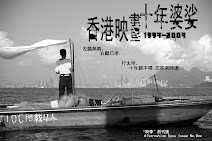
這一個月有過s的短暫消失,還有我病奄奄的掉隊。幸虧M極有責任感的堅持,作爲創刊負責人的不懈催促,還有在某兩位導演仙逝時及時的獻稿。傳説中的美術指導Bunny為我們設計了logo和cover。圖片由法籍獅子人提供,上面這張圖讓我們三個一眼中意。我的理由是它似極法國版的東邪西毒海報(冷)。文字方面,除了我們自己的一些稿子,還有一些優秀的特約撰稿人也慷慨捐助。Eric的杜琪峰,靜遠的陳可辛,S友人的十年一戯,Jason頗具學術風範的queer cinema。有趣的是,熱愛香港電影的人鮮有不關注王家衛的,而我們中間大部分又都是愛極他,只是沒有一個人寫。也許是怕掉入陳詞濫調的坑,自覺不是潘囯靈便也羞于談王家衛?於是我們想到了HKU某lecturer關於王家衛的一篇著名撰稿,在二十一世紀的網絡版上已經登出,也有無數的blogger進行了轉載,雖然未經作者同意,不過相信冷漠的dr.y是不會介意的吧。

希望過了假期,諸多不在狀態的寫手可以儘快復蘇腦動力,成爲我們的撰稿人。
第一期做香港電影,一是應景于香港回歸是周年,二來也算了卻我個人對香港電影深厚的感情。儅很多人問我喜歡什麽電影的時候,第一個從腦中跳出來的竟是諸多港產片。我對香港的認識,10%來自家人,20%來自香港流行音樂,30%來自香港電視劇,40%便來自香港電影。沒錯,香港電影對我而言始終是電影的啓蒙。

小時候每年要看的香港賀嵗喜劇片,一群明星,大大小小,熱熱鬧鬧。一部家有喜事可以成爲假期后整個班級的熱話。意不意外,開不開心,周星馳張曼玉,張囯榮毛舜君。開始認識周星馳,逃學威龍,唐伯虎點秋香,國產淩淩漆,食神,大内密探,喜劇之王,儘管嫌他不夠精致,儘管覺得有點俗氣,但只要看過五分鐘,卻必定忍俊不禁。沙龍的老闆放着周星馳,一個人笑到抽筋,不斷地提醒你,你怎麽不笑啊,這樣憋着要生病的。你知道,那些老了掉牙的橋段已經不再發光,我們長大,老周開始做導演,地球運行到了新的次元空間,但有誰可以抹殺一度的輝煌璀璨。

小時候喜歡看古惑仔。直到今日依然有同齡人會這麽問起:香港真的有這麽多古或仔麽?坐在電視機前,對一些粗口半生不熟,卻被黑幫兄弟情誼深深感動。於是想,做死黨便要做成如陳浩南同山雞那般。條子總扯上廉政公署,義膽俠情必是出現在社團手足閒。黑幫警匪片從小看到大,無間道讓人驚艷,黑社會卻走上了迂回。發現有的東西還需純真年代觸碰,黃金歲月的電影,還有青蔥歲月的自己。後來鄭伊健成了華英雄,白髮飄飄只會裝蒜,陳小春成了穿着肥tee肥褲的街頭中年。一首友情歲月燒在了那特定的日曆上,再度翻唱,僅是致敬。

打打殺殺還有功夫片和武俠片。一直不喜歡成龍,覺得那個大鼻子猶如梁朝偉的眼神一樣太過邪惡。小時候瘋狂喜歡李連傑的電影,精武門和冒險王,明信片壓在玻璃下,一放就是幾年。看看黃飛鴻,看看方世玉,覺得行走江湖是一件很酷的事情。

小時候還喜歡鬼片,叫得稀里嘩啦抱着枕頭公仔也要看完的那種。日本鬼片太過陰森,看完一部有一個月不能獨自去洗手間。香港那時的鬼片卻是不同,充其量是打打馬吊多出來一只手,結果就在王晶肥嘟嘟的臉部特寫上噴了飯。看看再老些的電影,撞到正,胭脂扣,倩女幽魂,原來鬼片還能這麽拍,原來鬼片不單單是鏡子裏奪了個人或者樓梯上多了個影子。後來的香港鬼片開始變得“日韓化”,内地審查制度爲了推崇無神無鬼論,硬生生地把結局變得唯物主義。一出鬼戯,嚇得半死,到頭來卻不知所云。林嘉欣成了出了名的“鬼妹”,漂漂亮亮的臉蛋總帶着怪物的陰影。有個香港人說,現在的點心真是沒法吃,看看叉燒包麽想到八仙飯店,包子又是新龍門客棧,餃子麽來了個三更。。。全民瘦身。

後來人大了,就不再糾結打打殺殺風風火火。

喜歡張囯榮。幾乎看了每一部電影。甚至有第一部被某吳姓電影人騙去拍攝的III級片,唯一的收穫是知道了賈寶玉就應該長成那個樣子。看張囯榮的電影,幾乎囊括了香港電影“黃金時期”的發展歷程。有過青春勵志片喝彩鼓手畢業生,有過古裝武俠電影楊過小龍女東邪西毒東成西就,有過搞笑賀嵗片大富之家金玉滿堂大三元,有過警匪動作片英雄本色藍江傳,有過愛情小品金枝玉葉戀戰沖繩,有過文藝電影春光乍泄阿飛正傳胭脂扣霸王別姬,有過愛國民族電影紅色戀人,有過公益電影流星雨,有過魑魅魍魎異度空間。

感動于新浪潮的兩代人。許鞍華譚家明徐克方育平,王家衛關錦鵬嚴浩張之亮。電影可以這麽拍,奇芭可以這麽開。

多得David Bordwell那一句盡皆過火,盡是癲狂,最大程度上理清了那種朦朧的眷戀。日本電影好,韓國電影好,美國電影好,歐洲電影好,卻都無法替代香港電影之于我的重要性。在那個中國電影還處在秋菊的年代裏,在那個錄像帶裏盡是好萊塢超車槍戰爆炸外加繁體字幕(類似米高傑克遜之類。。。儘管MJ並沒有出現在那些電影裏)的年代裏,是香港電影填補了空白,並填的滿滿當當。

最後簡單闡述我對當下香港電影的一個看法。去年年產51部電影,有人都說香港電影快死了,臺灣電影的屍體躺在那裏做標本呢。也有人說香港電影邁上了精英化,重質不重量的道路。有人說香港電影公認的黃金期已經過去,並一去不再返。也有人說,真正的黃金期根本不是八十年代中后至九十年代中,而是八十年代初期的新力量衝擊。更有人說,北靠神州,百年機遇。而我個人覺得,香港電影正處在一個重要的轉型探索期,萬般皆有可能。只是拍電影的和看電影的,都要記住切忌比較,過往不賴,卻畢竟是隔着塵埃玻璃的過往,觸不到也回不去。打開思路尋找新的定位才是當務之急。只手遮天已是不可能,分一杯羹卻綽綽有餘,切勿妄自菲薄。

2007年8月18日星期六

以"合"為貴----合拍片,合出香港電影新氣象

By Nichole

八十年代至九十年代初期,香港電影曾一度以其多產及多元稱霸一方,無疑是華語電影界,甚至是亞洲電影界的一枝獨秀。到了九十年代中後期,全盛時期資金寬裕所縱容的粗製濫造而埋下的禍根開始隱隱作患,金融危機和百年回歸所引發的身份危機又擾亂民心,日韓等國家地區的娛樂文化產業迅速崛起,都很大程度地動搖了香港電影工業那曾經獨一無二的地位。2006年,香港電影年產量降至八十年來最低,僅有51部。岌岌可危,不少人開始擔憂香港電影正如臺灣電影一般漸漸死去;但也有人認爲香港電影工業正在邁入一個精英化模式,量的減少換來的是質的精煉。個人以爲,香港電影正處於一個新的探索期,回歸十年,香港的政治文化經濟身份地位都逐漸步入成熟,而電影,就同這座城一樣,需要為自己的新身份尋找新的前途。


其中,合拍電影必定是一條光明之路,也是香港電影正在嘗試、並且大有潛力可挖的發展方向。合拍片是指在電影資金或製作人員上由多地合作生産的電影,不僅在融資上帶來更大的便利和靈活性,更可取長補短、集聚各地優秀的人力和技術,而票房號召力也可在多地盡可能擴大,實為一舉多得。如果說從市場來看,香港電影有四扇大門,即香港本地、中國内地、泛亞洲地區和歐美地區,那麽從合拍片的現實來看,對香港電影最實際也最能令其施展拳腳的合作夥伴就非中國内地和泛亞洲地區莫數了。


“背靠中國,面向世界”,中國大陸無疑成爲回歸後的香港最強有力的後盾,電影方面亦不例外。輿内地合拍的香港電影,從1997年總年產量186部中的25部,至2006年年產量51部中有38部是合拍片,而十年中的合拍片纍計總數接近200部。香港電影開始越來越注重輿内地的合作,而“北倚神州”對香港電影而言也是受益良多。第一,内地市場之大將會是票房的有力保障。第二,香港電影作爲華語電影先鋒的代表,畢竟是内地觀衆在影像文化上的啓蒙。儘管香港與内地百年分離所導致的文化觀念上的差異再所難免,但終究也都是炎黃子孫,上下千年的文化根基一脈相承。第三,2003年CEPA(《内地與香港關於建立更緊密經貿關係的安排》)出臺,實行符合規定的香港内地合拍片可作爲國產片在内地發行。其一,内地演員的比例不得少於演員總數的三分之一,其二,影片情節和主要人物須與内地有關。在每年只有五十部進口限額的内地電影市場,香港電影便無需再與西片爭搶機會。另外,今年七月國家廣電總局批准廣東省可主動推薦、選擇引進港產粵語片在省内播放,一方面數量上不受配額限制,另一方面上映速度也更快、内容更新,語言方面還更適應粵語地區觀衆的文化習慣。這種種都成爲了香港電影進軍地内市場最大的推動力。但不可否認,香港電影在打開内地市場這扇大門時,也遭遇了種種挫折。例如,CEPA雖為合拍片提供了優先權,但諸多電影也因爲不符内地審查的政治要求而不得不削足適履,其中以黑幫片和鬼片的情節刪改最爲嚴重突出。再如,内地音像市場的盜版問題,以及電影與音像製品的同步發行也深深困擾了預期上映的港產電影。


其實早在97回歸之前,香港内地的合拍片也已經有不少膾炙人口的作品,比如黃飛鴻系列、新龍門客棧,東方不敗,等等。但那時的合作理由多是爲了借助内地獨有的自然資源以及廉價勞動力,題材和關注角度也鮮能體現出“合作精神”。可喜的是,回望九七后的諸多合拍片,香港的電影製作人將視角拓展到了關注中國人,而非僅僅是中國香港人。例如,關錦鵬的電影長恨歌改編自内地著名作家王安憶的小説長恨歌,記錄了一個上海女人在時代變遷下的個人際遇;陳可辛的如果·愛,通過戯中戯的敍事方式,講述了一群電影人的情感經歷,為空白了幾十年的華語歌舞類型片填補了空白;許鞍華的姨媽的后現代生活,通過一個回滬知青的晚年生活,反映了被飛速發展的城市所遺棄的小人物的無奈和無力。電影人逐漸認識到文化共通的本質和溝通的必要性,並在揣摩兩地觀衆心理這一大課題上給予了更多的關注。


香港曾經是亞洲地區不可替代的流行文化發源地,而今日韓作爲後起之秀,從音樂到電影、從偶像到娛樂業運行機制,都令香港失去了當年叱詫風雲的號召力。香港的流行文化是否從此以後再無翻身之日?香港電影是否已經遙遙落後于韓國電影?這一切的答案都取決於當下的香港電影如何對日益變動的亞洲文化格局進行反應。2006年的釜山電影節上,亞洲製片人網絡(Asian Producers Network)正式成立,從此為亞洲合作製片提供了更多的機會,凝聚亞洲地區的優秀創作力,從而提升亞洲電影的國際競爭力,有效並健康地對抗好萊塢電影在亞洲市場的霸權局勢。合作共進,同樣應該是香港電影在亞洲範圍内的新方向。首先,合作可以使各國在電影製作上做到取長補短。香港電影向來以成熟的運作和大膽的嘗試著稱,但也有粗製濫造和唯利是圖惡疾纏身,而韓國電影製作的嚴謹及細緻恰恰可以彌補香港電影這方面的短處。其次,各國明星效應的積聚,可能不僅是號召力的相加,而是成倍效應。周全考慮到各地演員的人氣號召力,可以使電影在各地上映時的票房都得到有力保障。再者,合拍片在資金的籌措上具有一定的優勢,並且可由多方共同承擔風險。近年亞洲合拍片的成功案例比比皆是。劉偉強的雛菊,既是頗具典型韓國氣質的愛情小品,亦融合了不少劉氏警匪片元素。張之亮的墨攻,一方面是完全依靠亞洲力量(中國内地30%、中國香港20%、日本35%及韓國15%)而完成的資金籌措,另一方面也集合了各地的票房保障,如香港的劉德華,臺灣的吳奇隆,内地的王志文,韓國的安聖基等等,成爲亞洲合拍電影的成功典範。


以“合”為貴,合拍片或許可以使香港電影“起死回生”,但這似乎也是一條荊棘之路。一些人拒絕承認功夫是香港電影,一些人質疑父子究竟有多少“港性”。合拍片,是合出更多火花,還是中和了香港電影獨特的個性?


或許如儸卡所說,何必如此拘泥,真正熱愛電影的人只是期待優秀的電影。但畢竟,一直愛着香港電影的人們,終究不忍見其稜角全無吧。香港電影只手遮天的歲月可能已經一去不復返,但作爲一支獨秀、芳香萬世,卻不是沒有可能。只是在香港電影探究自身出路的同時,看電影的人也需以嶄新的角度和開闊的胸襟面對和期待。

WKW

旅途勞頓,險象環生+Handover in Johnnie To’s PTU

BY SOLO


最近重新翻閱了七月份的《電影世界》,裏面有句話很對,香港人對香港電影的分析總是與這座城,密切相關,而從技術層面對其進行分析的文章很少。我們不是香港人,不可能複製他們的眼光與思想;無論逗留多久,都是註定的外來者。而香港電影之於我們,更是一個他族的文化現象。

談及香港的文化,在到達此地的初期,我對它總是很抗拒的。拒絕被同化,不想成為泡沫劇中那種冥冥中被註定又無力掙扎的角色。殊不知,我只是在看到了文化的表像的時候就對其反感,禁錮住自己不去深究這所謂 “無根”的文化生成的緣由。以至於,在最初接觸到HANDOVER一詞時,我並不以為然它對於這座城的人而言有多麼歷史性轉折性的意義。

某次讀到Tony Williams分析徐克的Once Upon A Time in China系列,說它講述的就是一個香港人身份尋找的事宜。他將這個系列的第六集Once Upon A Time in China and America與成龍的Who Am I一併進行了分析。兩位主人公都是在意外受傷後失憶,對於失憶後的生活不能完全接受,總是力求尋回以前的記憶,終於歷經辛苦他們成功地找回了記憶。

讀到此處,我不覺假設自己是逃往香港的一個內陸人。我有一個屬於PRC的記憶,一個被光輝的民族奮鬥史籠罩的中華民族的記憶,但當我離開後來到了香港,社會制度背景轉變了,我的身份也自然轉換了,而這兩種制度在意識形態上是互補不相容的,並且我也隨帶被打上了被殖民者的烙印。對於過去是保留還是遺忘,keep nostalgic or amnesic?慢慢地,根似過去已盡遙遠,而現世的繁榮讓人低頭向前。香港和港人總在尋找屬於香港人的一個集體記憶,用什麼定義香港定義香港人?回歸之前,他們無法說自己是英國人,因為作為殖民地的居民他們不能完全擁有與英國公民同等的權利;他們也無法說自己是中國人,因為當時中國對於這座城是無能為力的。這個haunting了港人幾十年前的問題,隨著1997的臨近再一次被強調。一面是1989的那個並不遙遠的記憶還透著血腥味,一面是長期享受到資本主義殖民地這個尷尬身份所帶來的相對富裕的生活,也許香港人對於到底生活在誰的統治下已失去了強烈的意識,也許他們看重的不是who而是what。但當handover到來時,他們被強化了who的概念,被提醒混亂的過去,且被承諾一個無法預知的未來。又一次,他們面臨著一個身份與意識形態的轉變。於是,所有的人又開始了選擇,nostalgia or amnesia。不少的人選擇了migration。難怪有一次一個加拿大的朋友說,在TORONTO的華人幾乎都是香港人。

記憶是可以選擇的,丟失與尋回,放棄或保留。但身份是無從選擇的,被給予,剝奪或是改變,似乎這座城就如海上浮木一般“忘卻來時路,不知歸途”。

97後,香港螢幕上湧現了許多探討香港面對handover的電影:《去年煙花特別多》,《甜蜜蜜》,《Who Am I》等等。

杜琪峰的PTU就是一個討論香港身份遺失的作品。影片圍繞肥沙尋槍以及PTU幫助肥沙尋槍而展開,故事發生在子夜交替之時。一個非典型警察肥沙在下個月就要升職的情況下丟失了警槍。警槍是一個警察的身份的證明物,丟失了警槍,就如一個城市丟失了身份。於是為了保住肥沙的promotion,又出於兄弟之間那份情誼,PTU隊長Lo答應幫助肥沙在換班之前尋回槍。諷刺的是,當肥沙不惜與黑幫合作為的就是給自己的警察身份找回個物證時,他卻與一個gangster無意中交換了身份:他誤拿了馬尾的手機,被電話的另一方誤認為時馬尾;同時也給調查馬尾謀殺案的警官Madam Zhang提供了懷疑他的線索。一次誤拿電話出賣了肥沙的身份,而那把比名譽還重要的槍仍舊不知所蹤。當然,更諷刺的是肥沙如何找回了那把槍。在片尾那場staged似的混亂火拼中,肥沙被避退到原來丟槍的那條小巷,眼看對手舉著槍就要出現了,他一頭撲進了垃圾堆。只聽一聲槍響,一個人的腦門心紅色的一點還在冒煙,而跪在地的肥沙卻傻笑了。原來他在那堆垃圾裏摸到了自己原以為是被小混混偷走的警槍。所有的曲折,饒了一圈都回到了原點!肥沙的身份不再受到質疑,所有的警察都同意編造一個故事來掩蓋這一夜的事實:警察的丟槍與失職以及一場因警察而起的槍戰。一夜風波之後世界仍然透顯著太平,升值的還是靜候著升值。

其實在杜琪峰的銀河映像造就的警匪電影中,警察總是有種schizophrenia的趨向。首先是《暗花》裏梁朝偉塑造的那個“只要給我錢就行”的警察。他是一個遊弋在黑白之間的棋子。殘忍,狂妄,自負,最後又拜倒在命運之下。劉青雲在牢裏對著他一言不發的玩著一個橡皮球的情景也就是在告訴他:不是你被偶然選擇,而是你註定了無從選擇。接著是《暗戰》裏劉青雲與劉德華那種發生在兵與賊之間的惺惺相惜的複雜情感。他們因為一場復仇的遊戲開始,誰是兵誰是賊不重要,重要的是這是他們兩個人之間的遊戲,敵人變成了戰友。再到PTU裏,肥沙這個狼狽的警察丟失身份,又與匪徒交換身份,從一個警察變成了被員警懷疑的物件。儘管最後他巧合地找回了槍,掩蓋了丟失的事實,但他卻無法掩蓋這場鬧劇下身份危機這個事實。

這種種警察形象的塑造,似乎都是在映射香港這座城的曖昧身份。警察本應保證這座城的安危秩序,可現在連警察這個正義的代表都概念缺失,身份模糊,游走在正義的邊緣,那麼這座城到底又有什麼樣的身份,未來又怎樣呢?誰又能在每次轉折,選擇時給出一個承諾,說這座城由我守衛,在我的帶領之下它一定有一個美好的未來?也許,這座城的人不需要某個誰的允諾,他們需要的只是這個誰將允諾兌現的效率。

而換念想之,這樣長期的混雜本身就說明,其實對這個城市身份的疑問不需要一個確定的答案,因為這座城在如此的混雜之下依然生存著,繁榮著。

這就是屬於香港獨特的生存之道。

PS:仅为一个旁观者看香港


Handover in Johnnie To’s PTU

Starting from a poster

The day July 1, in 1997 marks the end of a century and a half of British colonial rule in Hong Kong and its return to mainland China. Years after 1997 are a period in which Hong Kong and local population alike have to adjust themselves to the new political and social situation, and most important to relocate their identity as a SAR of the PRC. Hong Kong cinema in the post-1997 era has witnessed a handful films which reflect various social crisis following the handover and a sense of anxiety and loss of faith towards the future experienced by the local residents.

In the post-handover Hong Kong cinema,. Johnnie To and the Milkyway Image has approached the social problems through his typical crime/triad films, such as Too Many Ways To Be Number One (1997) The Mission(1999), Running Out of Time (2001), in which he has depicted a jeopardized male society in response to Hong Kong’s transition. There are killings, disbeliefs, life-death games in these movies. They articulated the yet-to-be-crystallized anxiety of Hong Kong people towards the 1997 event (Esther Yau 1994).

Different from To’s other crime/gangster films, like The Mission, The Election, which depict a jeopardized masculine chaotic world, PTU focuses on a cop’s identity crisis, whose frantic search for a gun embodies the same mission facing Hong Kong as a city in transition.

This poster of PTU successfully includes some most important elements useful for decoding the film. The background figure is dressed in PTU uniform. Although occupying an overwhelming proportion of the poster, it is reduced to a black outline without a clear face, which signifies a protective paternal, masculine but rather ambiguous figure, Mike Ho (Simon Yam). The screaming man in the shadow is the main character, Lo Sa (Suet Lam) who loses his gun. During the search for the gun, he has undergone a series of identity crisis. Although he tries to pretend as if in normal state, his screaming in the climax reveals his paranoia and splitting identities. Below him are the only two female figures, Kate (Maggie Siu) and Madam Cheung (Ruby Wong) in the film, both of whom work in a male’s field, police system, but are excluded outside of the male world to a certain extent. It is said there is a decline of masculinity in the post-handover Hong Kong cinema, especially those films produced by Johnnie To’s Milkyway Image. Although, in PTU, there still is anxiety in the male society, the dominant patriarchic figure is reinforced judging from the evitable failure of the femininity representatives, Madam Cheung, and Kate.

Searching For Identity

One crucial change in Hong Kong’s handover is the handover in police system, from troops named as British Royal Army to Hong Kong Special Administrative Region Police. They serve as an important force to keep stable situation in society. The movie begins after the handover of PTU patrol at midnight when the new crew are sitting in a police bus listening to news broadcast reporting that four Chinese men have robbed a bank and a police officer was shot dead. Some younger crew are making fun of the dead officer when Mike Ho, head of the crew, stops them and says: “Anyone wearing this uniform is one of our own.” He attempts to reinforce the sense of a hegemonic identity and unity among them, which is signified by the uniform. The remarkable change in police system is the change of their external symbol of policemen, the uniform. Here, Mike proclaims that once they’re wearing this uniform they own same identity as policemen and they are supposed to sacrifice for each other just as what he dose later for Lo Sa.

While Mike is trying to maintain a united identity for the whole crew, another representative of the police system, Lo Sa, a sergeant in the anti-crime division, is undergoing an identity crisis: he lost his gun when trying to attack a hgangster Ponytail’s boys. In the police system, guns are the signifiers of polices’ identities. Every cop is assigned with a particular gun with his series number registered in the system. “This cop” should be responsible for and report every bullet coming out of his own gun. Thus, the gun is no longer just a tool to suppress criminals, but rather a signifier of this cop’s unique identity in the justice system. Once losing the gun, Sergeant Lo’s recognized identity is lost and his integrity is confronting a crisis of being set up into murders. As Lo is going to be promoted next month, Mike decides to cover for him and help him find the gun. Instantly, Lo himself goes on a frantic journey to recover his identity and integrity. He dashes to buy a fake gun but has to cut it short and paint it as to make it to look like the police gun as a temporary substitute for his lost identity. The first thing he is concerned about of Ponytail’s death is whether there is any gun wound on him and after knowing there isn’t, he reaches for the fake gun on his waist to reassure his successful pretension as an integrate cop.

However, just as Lo assumes his identity has been temporarily secured, it is actually being challenged again by one modern commodity: cell phones, which plays a dramatic role in shaping people’s identities. In one scene, Lo steals the ringing cell phone of Ponytail and asks: “Who are you?” Then, the person on the other end asks the same question. They keep on repeating this question and one question only without offering any answer. As Gina Marchetti analyzes the function of Tsai Qin’s “Forgotten Time” in Infernal AffairsⅡ, she points out that “The lyrics ask the key question ‘who?’ echoing the trilogy’s reoccupation with questions of identity.” (Gina, 2007) So is true with PTU that such repetition reveals the key question is how to relocate one’s identity once lost or facing a change. A cop and a crook are speaking on the phone, both of whom are eager to find out each other’s identity, but don’t actually give a thought of who he is himself, or rather they even don’t know who they are because their identity signifiers are lost. They try to relocate their identities by constantly consulting the other on the cell phone, but refuse to expose themselves before the other one does.

The identity question is repeated over and over again until it has become an unsolved problem and kept haunting Lo, driving him paranoid in the climaxing moment. More ironically, the identity crisis is enhanced by the fact that how readily a person’s identity as a cop or a crook can be exchanged when Lo takes Ponytail’s cell phone as his own by mistake. He constantly receives wrong call, and constantly be regarded as Ponytail. He indeed has taken on the position of a crook, and further associates with gangsters. As “people carefully craft their identities through commodities in the modern society” (Gina, 2007), the uncertainty of communication through cell phones indeed make people’s identities more flexible and fluid.

Concerning the interchange of identities of cops and crooks, who should be at two extreme opposite, Gina Marchetti describes Lau and Chan in the Infernal Affairs as “a criminal pretending to be a cop and the cop pretending to be a criminal…After 1997 and Hong Kong’s intermediate status as an SAR under PRC sovereignty, their identities become even less certain, and their missions less clear.” (Gina, 2007) Who are they? Are they the integrate cops in the political system with stable position or rootless illegal cops in the triad society? The traditional moral is confused and no longer stands in an absolute position.

Such a sense of an uncertain identity and unclear mission actually arise from the prevailing sense of loss among the Hong Kong residents at large. Even before the handover, their sentiments with both British and Chinese governments are ambivalent. For these Hong Kong residents, they have lived without a proper nationality, being neither Chinese nor British.

After the trauma brought by PRC’s cruel suppression of 4 June Massacre, and the 1998 Asian financial turmoil, for the Hong Kong residents, it seems the liberation from a colonized state to a SAR in China does not necessarily anticipate a certain future. Their new identity does not promise them a bright life. Even these policies, like the “no change in fifty years” and the “one country, two systems” implemented by PRC in an effort to retain, or rather to achieve a stable situation in the post-handover Hong Kong may not answer questions like what do Hong Kong people need in order to relocate themselves? In response, the contemporary Hong Kong film expresses a local yearning for its own orientation, a search for an identity which belongs to Hong Kong itself.

Interesting, in PTU, which is produced in 2003 and set in the year 2000, Johnnie To has assigned the search-for-identity mission to Sergeant Lo, a representative of the police system, which ironically raises a question that other than local residents, how the authority should adjust themselves to meet the challenge imposed by the handover? What’s their role in leading the city and people to relocate themselves? And To has pushed the question further in PTU by making Lo identity more flexible and fluid as Lo exchanges his identity with Ponytail through cell phones. Namely, in Hong Kong, the search for identity has been perplexed by the postmodern characteristics in Hong Kong.

In the film, he has given special focus to modern commodities like cell phone, cars, and guns, and closely related them to the fates of the characters. Consequently, he reveals a fact that in Hong Kong, a modern city, people’s life has actually been turned into a postmodern mode. Since they have heavily relied on the modern commodity and advanced technology, which are ever-changing and can be easily exchanged, people’s lives have been imposed the same uncertainty and insecurity. The fact that people are in a constant search for the certainty endowed by the possession of changeable modern signs is an revelation of insecurity; on the other hand, such search will be dangerous and an inevitable failure due to the nature of the ever-changing technology.

A Way Out

In the whole film, Lo is always trying to pretend to be an integrate cop before he could recover the certain recognized legal identity. However, in the climaxing moment of the film when the open fire begins between the gangsters and the PTU crew, he instantly screams. His attempt to mediate between the gangsters and the cops fails. He is supposed to possess one certain identity in the crucial moment, a cop or a gangster? Unfortunately, he is unable to stand for any one of the groups. The fierce battle endangers his identity pretension, and eventually forces him to outlet his inner insecurity and paranoia brought by the identity crisis.

In PTU, Lo can be seemed as the representative of a male world afflicted by the insecurity and fear toward the unknown future (Pang, 2002), which is in response to the social transition.

“In an interview, director Johnnie To reveals that entrapment and powerlessness are two crucial themes in the early Milkyway Image films, which reflected the gloomy economic environment Hong Kong people were experiencing in 1997 and 1998 (Johnnie To 2000). Many people felt despair about the future because of the rapid deterioration of the city’s economic performance, as either their multi-million-dollar apartment turned into a negative asset overnight, or their secure job suddenly became jeopardized. (Pang, 2002)

However, it dose not necessarily speak pessimistically about the anxiety in society. He is rather trying to suggest a possible solution to the relocation problem by reinforcing the masculinity. He portrays a strong masculine and patriarchic figure, Mike Ho as the positive image of masculinity.

In PTU, Hong Kong can be a paranoid cop without a recognized identity, a permanent tattoo on a punk’s neck, a life-long asthma for a thief. Johnnie To has entrust Mike the mission to restore the faith and stability of the male world. For Lo, he acts as a powerful protective figure, promising to help Lo recover the gun as if to recover the city’s lost identity. As a patriarchic figure, Mike Ho constantly maneuvers to keep a stable brotherhood in the male society. In the beginning scene, he reinforces the significance of the uniform and the hegemonic identity among police group; then when disagreements arose among PTU members about whether it is worthwhile to help Lo, he gently persuades them to try their best for the last since they are wearing the same uniform. Nevertheless, he can also be rather tough toward gangster.. In the game-playing station, he orders an aggressive punk to erase the tattoo on his neck; he dose the CPR to a thief, who turns out to have suffered from the “asthma” for all his life. For the punk and the thief, Mike acts as if he is forcefully exerting the patriarchic power to get rid of the previous taboo-like identity imposed by the British colonist to Hong Kong. It seems only through a strong patriarchic and masculine character who understands well of the particular rules of their own situation that the problem of the male world, of the city itself can be resolved.

Compared to Mike, two female figures, Kate and Madam Zhang, are excluded from the male world. Though dressed like a man and doing man’s job, Kate is unable to understand the unspoken rules based on the male brotherhood. She is rather a righteous cop but unqualified for Lo to search relief from. Madam Cheung is more aggressive and intrusive. She acts as a straightforward feminine authority intending to overthrow the male world’s rules. However, when the open fire begins, she even couldn’t manage one shoot, drops the gun and has to hide in the car, crying. The inner vulnerability and weakness of a woman overwhelms her. She will never get an answer to the Lo’s gun problem nor will get into the male world.

What Hong Kong needs may neither be the entirely righteous power nor an intrusive and aggressive suppression, which are embodies by the final failure of the only two female figures: Kate and Madam Zhang. There is no one straightforward and once-for-all solution to Hong Kong’s identity problems concerning the handover owing to the complexity of the city itself. Concerning the shift of Hong Kong’s identity from a thriving colony to a future-uncertain SAR, what Hong Kong and local people need may be a kind of power embodied by Mike, who with a sense of being united but also knows the indigenous specialty of their particular world, just like the policy “Hong Kong people to govern Hong Kong”.

In the end of PTU, it expresses a nostalgia feeling. There are many clues in the film developing separately at the same time: four Chinese men robbing a bank, Lo’s searching for lost gun, conflict between two triad societies. However, they all end up together at the same place in the last minute’s open fire. Just before the open fire, Johnnie To intentionally moves camera along to capture a huge post at a street corner on which is Taiwan pop singer Chow Jay’s new album: “ Return To The Past”. This may not imply the director’s wish to return to the former colony control under British, but certainly a wish to regain a peaceful and stable situation after all the turbulence of handover, Asian Finance Turmoil and the SARS. In such a hope that in the end of the film, Johnnie To makes all the cops involved in the battle tell one same lie to cover the truth up, and they still remain as integrate, legal and brave police. And Lo will be successfully promoted next month. It may seem that the truth is not important. What is important is nobody and nothing gets harmed after all the changes.

Notes:

Gina, Marchtti. “Infernal Affairs- The Trilogy” Hong Kong University:

Hong Kong University Press, 2007.

Pang, Laikwan. “Masculinity in Crisis: Films of Milkyway Image and Post-1997 Hong Kong Cinema”, Feminist Media Studies, Vol. 2, No. 3, 2002

Yau, C.M.Esther. “Introduction: Hong Kong Cinema In A Bordless World” At Full Speed: Hong Kong Cinema In A Borderless World, MN: University of Minnesota Press, 2001,

兩世花 十年心

/靜遠

陳可辛導演在港大訪談時說
,他的電影裏.女人總是現實.男人總是癡情.

1996年的“甜蜜蜜”和2006年的“如果愛”麼.

ALMOST LOVE.

PERHAPS LOVE.

時間,地點,人物,什麼都變了.

又或許什麼都沒有變.

十年蹤跡.十年心.

初衷.


1986年的香港,九龍地鐵站.當轉身把渾渾噩噩的他叫醒的時候,她的清晰眉眼,可曾在他心裏留下淡淡印跡?

相識相知的時候,她是麥當勞的售貨員,是英語培訓班的兼職,是賣鄧麗君盒帶的小販,是穿梭股市彙市里的炒家,是雙手酸軟的按摩女.

為了做到香港人,她刻意避諱著廣州人的身份.

為了賺錢給自己和媽媽買房,她什麼都做.只有在面對螢幕上提款卡餘額的大筆綠色數位的時候,才會露出滿足的微笑.

她告訴他: 黎小軍同志,我來香港的目的不是為了你.你來香港的目的也不是為了我.

1995年的北京,隔著霧濛濛的麵館窗戶,她喝完了他剩下的麵湯,被他發現後機靈地溜走,那清純眼神卻讓人過目不忘.

她在三裏屯酒吧賣唱,在劇組當臨時演員,天真地相信那個形容猥瑣的美國導演會把她帶去好來塢.

她在逼仄的地下室拖地的時候.總喜歡唱:外面的世界很精彩.

過去的種種苦難她選擇決絕,哪怕只有一根稻草,也要抓住往上爬,然後不再回望.

就算只是一個同樣青澀的小小副導演,她也跟了.

對於她,只有導演才是有利用價值的人.因為她想當明星.

哪怕在那些人情淡漠的城市裏互相取暖過,要離開時卻未曾遲疑.世俗洗去了女人身上所有的柔軟和幻想,因為有目的,就不能留戀.

手裏的維他奶和泡面是真的,而在斗室中相濡以沫卻成為一場幻覺.

經過

李翹遇見了黑社會的豹哥.那些金表金鏈子那樣刺目,好像可以點燃心裏那對生活的微渺希望.後來跟了他,成為珠光寶氣的老闆娘,回家置房也是衣錦還鄉.是他讓她明豔照人,如願以償.

孫納遇見了慧眼識珠的聶文,那個一心要拍好電影的導演,一部一部,捧她成為鎂光燈聚焦下的明星.街頭巨大的廣告牌上,她的小臉映襯著絕世名表如傷花怒放,可遠觀而不可褻瀆的冷豔,供萬眾瞻仰.

他們只是被利用的貴人.

為什麼他死的時候,她執意要轉過他的身子看背上為她紋的米老鼠,淒哀的又笑又哭.

為什麼在戲裏,他從高空中迎向他又放手,跌落雪地後的汩汩鮮血讓她悵然若失.

有錢,有才,就一定無情麼.

對於女人的舊情,他們洞若關火.

她最壞的時候他都見過,於是什麼都不再計較.

只是疼惜,只是包容,卻不露痕跡.

他說:不要跟著我,丫頭,想明白了回家沖個涼,明天出去滿街都是男人.

他說:孫納,放手吧.

或許,富貴之後的人才會看輕物質名利,才有姿態把那些當作過眼雲煙.

他們的感情是慢慢被提純的.放手時,也變從容淡定.

她們是幸運的.


轉身

終究是戲.

1995,李翹在美國,播報鄧麗君死訊的電視機前,轉身看見了那張魂牽夢縈的臉.

他們笑得那樣甜蜜.

十年的悲歡離合變得那樣輕,滿心喜悅在那充滿回憶的歌聲中蕩漾開來.

情到濃時情轉薄.那個人象化石一樣停留在心裏的最深處.雖然再回頭時滄桑滿眼,但是一切的歡喜,都是那樣自然,仿佛這一刻終會到來.

眾裏尋他千百度,那人卻在,燈火闌珊處.

2005.他說不管十年前是人是鬼,他最怕的是,她從來沒有愛過他.他說,他居然愛上了一個他鄙視的人,最後連自己都鄙視自己.他要離開她.

在機場拿出兩張機票的那一刻,他終究是遲疑,轉身,回頭奔跑.

他們又在那片雪地裏久久地相擁.她哭得那樣讓人心痛.

她也許是愛他的.

只是,人生若只如初見.

等閒便卻故人心,他卻在原地癡癡等待,那個已不復純真的她.

愛恨交織終於隨片片飛雪塵埃落定,而他只是在祭奠,那個曾經單純付出的自己.

若是深情,十年消磨糾纏,也仿佛只是倏忽而過.

天涯海角,音信全無,這樣努力地生活,這樣乾枯地生活,這樣被思念滋潤和折磨地生活.那些人總是喜歡沈默,喜歡獨自微笑,發梢淩亂柔軟,手心有輕微汗珠,眼神有溫柔敏銳的光.

不被同類人戰勝,不被時間戰勝,只被命運的翻雲覆雨手戰勝.

怕只怕,當轉身時深深地張望,那燈火闌珊處,空無一人.

山長水闊知何處,請且憐取眼前人.

影像香港:王家衛的八部電影與六個香港

轉自《二十一世紀》網絡版 二○○七年五月號 總第 62

文/邱加輝

 在一些粗疏的市場關係和地區國族定義下,王家衛的確看似是個典型的香港導演。這些定義是「粗疏」的,但並不是錯誤的。王家衛無疑是其中一位最具代表性的香港導演。這已是陳腔濫調,還能錯到哪裏?

  如果所謂的「香港電影」是由香港電影工業的主流運作模式,以及主流香港觀眾的口味去界定的話,王家衛的電影其實不太代表香港。從敘事結構、畫面構圖、鏡頭調度、題材、市場定位等方面來看,王家衛的電影都明顯地不太像一般的「香港電影」。當然,所謂「不太像」也不可能完全是前無古人和脫離整個工業和文化的運作方式的。例如:70年代後期的香港新浪潮電影對他的影響,是顯而易見的,而他也確實曾被歸類為「第二浪潮」(second wave)導演1

  從接受程度來說,不管是在香港還是外地,王家衛得過的獎項也不足以在流行程度和金錢回報上算是反映香港觀眾口味的。香港當然有喜歡和支持他電影的人,但他的電影也同時被貼上「非常冷門另類孤芳自賞型悶藝片」2的標籤。像一些其他知名香港導演一樣,他不是一面反映香港的鏡子,儘管要數香港名導演之時,這些名字又往往是人們口中的不二之選。王家衛如果因此而欠缺代表性,他電影中卻又出現了香港電影工業中最受歡迎的演員,跟他一起以很長時間拍攝極昂貴的電影。這不是香港電影工業中的常態,也因而羨煞了不少旁人。

  這種「不代表性」3也呈現在他的電影影像和敘事之中,和慣見平常的香港保持距離。他的電影對現成的一些「香港們」作出了反應,一種「非真實」的反應。德勒茲(Gilles Deleuze)認為,「如實的敘事(la narration véridique)是以有機整體的方式進行的」,它按著空間上的既定規律和時間上的順序而發展。它形成一套對真實的「判斷系統」,包裹著真實的探索者和見證人。而當中對「真實」的標準,又限制和組裝著該些「判斷」為一系統。所謂的「有機整體」,實際上就是一套封閉的循環論證。時地的變化是存在的,但這套「判斷系統」「並不質疑當中的關係和連結。相反,這些關係和連結決定著這變化本身的條件或者元素」4。因此「如實的敘事」不只是實事實說,而是對現在所感知的真實深信不移,進一步強化構成這真實的機制,猶如一切都是客觀絕對,無須質疑眼前事物的生成過程。

  王家衛的電影並不以這種「如實」的方式去「敘事」,而他的電影也並不「如實」反映香港的電影工業和文化。這不等於說他的電影剛好是香港電影工業和文化的反面。他的電影真的有呈現香港,儘管那是通過「非真敘事」(la narration falsifiante)來呈現。它們動搖著探索者和見證人的「判斷系統」,受著德勒茲稱為「非真實力量」(la puissance du faux)的影響。「非真實力量」指向其他的可能性,來參與到真實的建構過程之中。在服從於既成模式而產生出來的「真實」之外,其他的可能性提供了重塑真實的可能性。既只是可能性,它們雖「非」真實,卻也並「非」虛假。「如果重塑非真實的人(faussaire)能呈現一些東西的話,那就是在她背後的另一個重塑非真實的人」5

  王家衛的電影就是一系列對「非真實」的重塑。當中的影像並不糾纏於事物的真相是甚麼,而是探求事物變「異」的過程和可能性。因此,說他的電影欠缺「代表性」是種誤導;說它們毫不「反映」香港也屬不確。正好相反,它們就是不斷地在代表和反映,不安於簡單平靜的一個「=」號。它們是一堆「底片」,從一種背反的方式去呈現一眾在變動中的香港們。香港在動,銀幕上的每秒鐘二十四格畫面也與時並進。

  王家衛的電影中最少有六個香港。它們本身就是各式各樣的可能性,在落實自身成為各版本的香港之同時,尋找它們的「香港」導演。故此,它們是變動的主體/題,多於是外在既定的客體。在八部王家衛電影中,它們最少在追問著六個問題。

香港 1:一個地方如何對電影影像作出回應?

  《旺角卡門》(1988)以華仔和烏蠅在黑社會中的遭遇為主線。華仔這個小頭目總要在麻煩中拯救手下烏蠅,而他亦開始與從大嶼山到市區看病的表妹阿娥相戀。因此,華仔萌生了離開黑社會的念頭。可惜想當英雄的烏蠅答應了替其所屬的黑幫執行一次刺殺任務。看重兄弟情誼的華仔,終於拋下了在大嶼山的阿娥,回到了市區替烏蠅完成任務。

  電影以大嶼山、調景嶺和旺角這些香港的不同地區,鋪陳出「城─鄉」的對立。說香港是金融中心已經是個老掉牙的說法,就好像放大一個地方的某一面向,便足以作為一個桌面捷徑,涵蓋並簡化這一城市中各式各樣的其他面向。在電影中的鄉郊地區如大嶼山,是華仔和阿娥發展戀情的地方;調景嶺是烏蠅變得光鮮富貴後想要回去炫耀一番的老家。它們都確實是香港的一部分,儘管它們不常被包括於繁榮的金融中心形像之中。旺角也地如其名,是香港其中一個最「旺」的「角」落。在戲中,這個城市中旺盛的角落,也是邪惡兇險的黑幫權力鬥爭之地。戲中「城─鄉」的對立,正正是建基於這一切的張力之上。Tony把華仔和烏蠅打得傷痕累累之後,便叫他們回到鄉間,因為市區是不適合他們的。

  過了十多年,今天的大嶼山和調景嶺已經不容易再做鄉郊的代表。旺角還是很旺,但今天的大嶼山和調景嶺,則比較像是在對它們往日的鄉郊日子進行反諷。大嶼山建了個新機場,有很多大型住宅區和高樓,現在還有迪士尼樂園和各種大型開發計劃。調景嶺則是1949年中共政權建立後,不少從大陸逃難出來的國民黨兵員聚居的地方。正因如此,不少人認為那兒在1997年前被香港政府拆卸重新發展,背後有因應香港九七主權移交所作的政治考慮。在戲中,華仔也叫烏蠅離開黑社會後回到這個避難所。如果《旺角卡門》要呈現另一個香港,香港這個變動中的主體/題卻把這種呈現變而化之,以其不斷的發展計劃加添新註釋。這種種的城市發展,正好是哀悼著「金融中心」此一香港概觀之下的那個「鄉郊香港」的步步失陷。

  在這些看似明確對立但又不斷蛻變的城鄉區分背後,還交織著種種人物關係的錯接。為了要幫烏蠅,華仔沒有回大嶼山見阿娥。在替烏蠅完成任務之後,華仔便被警察當場擊斃。這種結局在80年代的英雄片中絕不算新鮮。但這種兄弟江湖情卻還有著一種錯接的悖異邏輯,對這種兄弟江湖情進行反諷。華仔為烏蠅而死,只是完成了全片對他的英雄形象的描寫。但這個英雄形象並不是他想要的,他只想與阿娥在一起,退出江湖。反而想當一日英雄的烏蠅,正正是因為華仔對他的朋友之義,貫徹了全片賦予他的失敗者形象。到最後,還是要華仔去替他完成任務。他倆總是身不由己,扮演了對方的角色。華仔曾經勸他放棄任務回調景嶺老家。但如果他不能完成任務,風風光光,那麼回老家對他又有何意義呢?相反,華仔根本已經厭倦了做英雄,完成任務與否對他也是沒有意義的。他只想回大嶼山見阿娥而已。可以回鄉間的烏蠅沒有回,想回鄉間的華仔不能回;想當英雄的當不成,厭倦了當英雄的想不當也不成。

  不過,華仔沒有在烏蠅面前打碎他的英雄夢。他等烏蠅事敗身亡之後,才下手在觀眾面前替他完成任務。華仔這個戲中的英雄,待烏蠅死後,在觀眾面前打碎了他的英雄夢。而華仔這個早已英雄夢碎的戲中英雄,更連這個英雄片類型的基本規條都打碎。至於香港,也同樣待華仔死後和影片完結後,繼續在觀眾面前不斷變化,改易著這些香港地區在戲中作為象徵的作用。

香港 2:如何在模糊不清的影像中呈現金錢和身份?

  除了以地區作為象徵外,功夫在香港又是另一套象徵體系。李小龍的功夫電影和金庸的武俠小說都是具代表性的例子,而周星馳的新作《功夫》(2004)則更是開宗明義。當中又與金錢和身份大有關連。三者的流行程度和三人在金錢上得到的回報固然不在話下。1997年金融風暴後,更有人提倡興建李小龍紀念館,以吸引遊客及挽救香港經濟;香港電影業不景氣的時候,周星馳的《功夫》在票房上獨佔鰲頭,又好像代表還有不少願意進戲院的觀眾。以上的說法是否可信是另一回事,但有趣的是:香港這個人人口中的繁榮金融中心,在遇到金融風暴和經濟不景時,需要李小龍的功夫和周星馳的《功夫》來營救。這是錢的問題,也是身份的問題。

  《東邪西毒》(1994)至少在表面上是改編自金庸名著《射雕英雄傳》6。該小說於1957年連載於《香港商報》,並曾被改編為多不勝數的電視劇、漫畫和電影等。但《東》所謂的改編,並非指故事情節的改編。用德勒茲對戰後「時間影像」(l'image-temps)的其中一個特徵去解釋,就是「對故事情節的背離」(la dénonciation du complot7。此中的背離,不是要針對某一故事情節(在這裏,就是金庸那原著小說的故事情節)的背離,而是對故事情節在電影敘事中的地位進行背離。當然,故事片不可能絕對沒有故事情節。德勒茲只是相對地比較戰前的「動態影像」(l'image-mouvement)和戰後「時間影像」中,故事情節的模式和重要性而已。在《東》片中,金庸和其名著只存在於片名、人物名稱和身份,以及一些很微細的背景資料之中,而這一切也只映襯出全片的故事情節根本就是背離原著的。觀眾如果具備有關金庸那深入民心的原著的記憶,便只會看出《東》如何不像《射》,多於《東》如何像《射》。二者相輔相成,被承託於大家對原著的共同記憶和認識之上。先前提到那種「非真實」式敘事,那種「不是如此又可能如何」的探究,又出現在《東》那明顯是改編自另一文本的種種角色和名號,但又同樣明顯地是在這些名號和人物中,發展出大異其趣的其他可能性。

  若再推深一層,這種種的「異」像又不單是針對金庸的原著,而是廣及功夫和武俠等電影類型背後的文化意涵。這種意涵,最少是依賴這些典/定型來理解何謂「中國人」的國際觀眾和以此為榮的中國人,共同認可的。如果功夫和武俠可以代表著一種「中國特色」,《東》片中人物那些不太有「中國特色」的服裝,和拍得讓人看不清每招每式的變速潦亂武打影像,正正就是在背離著這些「中國特色」的典/定型。李小龍精彩的飛踢和成龍、洪金寶(儘管他又是《東》的武術指導)的典型動作場面,都是人們對港產武打片的即時聯想。但這一切又都恰恰是《東》所沒有的。一切動作都化成了光線與顏色的高速運轉和變異8,觀眾甚至看不清是誰的劍刺著誰的頸。要在此中尋找文化身份,存在的只會是游離跌宕、起伏不定的一類。

  此中的跌宕起伏,還可見於片中人物的身份錯接之中。慕容嫣/慕容燕這個一體兩面兼兩性的精神分裂者本身就是一例;他/她們把黃藥師當成是歐陽峰,並撫摸其身體又是一例;歐陽峰又裝睡不知,暗暗把撫慰都當成來自他至愛的嫂子,更是從無意到有意的錯接再錯接;盲劍客能與黃藥師相聚,但不能「見」他的面;而黃藥師又因為失憶,竟然一直在跟盲劍客談話也沒有認出他。戲中種種對身份和指稱的錯接,構成了人物關係之間,與及影像和其呈現對像之間的一系列動態背反。

香港 3:移動中的世界與移動中的影像如何互動?

  在《重慶森林》(1994)和《墮落天使》(1995)中,影像內斷續移動的燈光與手搖鏡頭同時運動,驅動著又一個香港。在《重》片中,林青霞飾演的神秘女子戴著假髮,與背叛她的人於重慶大廈和地下鐵路中追逐廝殺。他們都在不斷的動態之中,從地面上的高樓到地底的運輸系統,層層奔逐。這正好配合了香港這個被認為是過客踏腳石的地方,那不能停下來的脈搏。不管是進入還是離開中國,這片踏腳石總只是其中一站而已。重慶大廈的旅館,則更是過客廉宜的暫居處,可算是踏腳石中的踏腳石。但說是暫居,不少過客都在香港住了下來,成了香港人;而重慶大廈中的旅客,不少也一住便是幾年。正正是這種無限延長的暫時性,將香港與重慶大廈連接起來。戲中幹非法勾當的人物固然是活在一地下世界之中;而他們追逐於其中的地下鐵,則更是一般人每天穿梭的地下世界。一班又一班的列車,就像是這城市中的血管一樣。儘管人物國籍各有不同,但都是同樣流動於這些血脈之內。而林青霞本身,更是這各種身份的集合體。除了她在戲中穿戴的異色假髮,這位來自台灣,嫁給了一位香港商人並定居香港,但台灣大選時又不忘回台投票的女演員,自己的身份也滲入了戲中情節的一部分。

  在《重》的第二部分中,阿菲和警察633在舊機場一帶捉迷藏。其實,阿菲很容易便可以見633,但她卻選擇繼續捉迷藏,甚至將遊戲擴展到其「加州夢遊」(California Dreaming)之中。她當了空中服務員,將遊戲持續了一年。她回來與633見面後,他們又再造另一張登機證往別處去。而在《墮》中,黎明飾演的殺手和他經紀人的關係,是建立在殺手行業中奇特的運作方式之上︰他必須孤立離群。戲中地鐵移動的幾組影像,正和其他游離孤立的人物主體一起移動。而在殺手的居所外面,晚間汽車和地鐵車廂在畫面右邊閃動流轉,和左面不動的住宅單位正好是強烈的對比。這可說是動與不動的對比,也可說是快與慢的對比而已。地球萬物總是在動,只是速度各有不同。在這一幕中,殺手的空間很明顯就與外面的世界有著格格不入的兩種脈搏和速度。殺手的經紀人也只能從殺手的垃圾中了解他的生活,她與他的性生活也只是她的自慰而已。這些失敗的溝通,顯現出在一個變動中的城市當中,徘徊不定的人物主體各自不能對應的步速。雖然,他們的腳步都同踏在「香港」。

香港 4:如何從對蹠點回眸?

  在《春光乍洩》(1997)中,香港只出現於一組鏡頭,而且還是倒轉的。通過香港在地球另一端的對蹠點──阿根廷的角度,香港被呈現於1997年──正正是電影上映和香港回歸的一年。這一幕也是交代黎耀輝因為背叛過父親,不敢回香港見他的一段長長的畫外音之後的一幕。這種使人回不了家的背叛,就在此一特別的香港回歸年中出現於《春》。此外,香港的另一次現身則通過銀幕上的一本「英國國民(海外)護照」。這本護照的英國國民,是沒有英國居留權的。戲中,這本護照的持有人黎耀輝和何寶榮,在流落異鄉之餘,這異鄉還是曾與他們的宗主國在福克蘭群島交戰的阿根廷呢9!護照在電影開始時出現,後來二人大吵一頓後分手,黎更偷了何的護照,使他不能離開阿根廷。但後來這護照又再現於銀幕。黎把這本護照交還給何,也代表二人關係的真正終結。對何來說,護照的「回歸」反而是真正的分離,正好和電影的英文名字Happy Together相反,也和這回歸年的歡樂氣氛相反。《春》正正就是關於分離的。

  二人失敗的關係,不只是源於不合,而更是由於乖僻剛愎。他們分手後,何又想復合;復合之後,何又想分手。這過程不斷重複,直至黎下定決心終止二人的關係,讓護照「回歸」到何手上,再到台灣找他心中的小張。他在台灣找不到小張,只找到他家人賣食品的攤檔。他總還覺得有點安慰,說最少知道他的家在哪裏。不過,黎沒有想過,他自己在香港的家,不正是他不敢「回歸」的地方嗎?小張這個喜歡四出遊歷的人(不管是因何如此),很可能只是家中的稀客而已,更遑論他也可能像黎一樣背叛過家人,不敢回家。電影沒有明確交待黎自己有否厚著臉皮回家。黎說過他正在回家,但觀眾沒有在銀幕上看見。不過一次成功的回歸,可能只是另一次分離的開始,就像黎何二人的關係一樣。

香港 5:如何不斷索本尋源?

  在倒轉的香港影像和那個沒有出現的被背叛父親之外,《阿飛正傳》(1991)展現了一個尋母過程。跟養母數番爭執之後,旭仔最終都能逼她說出他的生母是誰。他能成功得知自己的「本源」,是因為他的養母要移民離開香港。旭仔果然找到生母在菲律賓的居處,但她卻拒絕見他。而他,也在離開時拒絕回頭,不讓其生母看見他的樣子。後來,他想買個假護照但又沒有付錢,結果在火車上被擊斃。當中的種種失敗,不單是關於索本尋源的失敗,也是關於認識到此一失敗後設法他逃的失敗。

  旭仔尋母不單是在電影中的索本尋源,也是《阿》片本身的索本尋源。故事發生於1960年,戲中的色調、背景和音樂,都充滿懷舊色彩。不過,阿巴斯(Ackbar Abbas)認為這不只是從90年代去懷60年代的舊,而是立足於1960年去懷的舊中之舊10

我們看見當時流行的香煙(Craven A);曾經受歡迎的皇后餐廳(一家提供港式俄國菜的餐廳);還有人們所穿的衣服、所戴的手錶,以至所開的汽車。甚至電影本身的色調運用,那深褐色的應用,使畫面像是老照片。但它不只是一張60年代的拼貼畫,用風格和影像去尋回歷史。從戲中配樂的運用,便可看出一非常重要的時間結構。配樂中有舞場經典作品,如 "Always in my heart" "Perfidia",還有一首廣為人知的中文歌。這些音樂都是60年代之前的,就算60年代還有人播這些歌,它們在當時都已經是過時的。如果電影在視覺上的細節表現著一個年代,電影的配樂則是在上溯一個更早的年代。……《阿》並沒有呈現出一個從90年代的角度看出來的60年代。它呈現的是一個更不穩定的結構:90年代和60年代的關係,就如同是60年代和其之前年代的關係,如此不斷上溯。

這不只是回到過去,而是一開放和延展的上溯過程,不斷地對過去層層進逼。當旭仔要找尋生母之時,《阿》片本身也以一系列的懷舊影像來索本尋源。不過,這「本源」卻並不是確實的,而是如阿巴斯形容為「已逝」(déjà disparu)的。在結識蘇麗珍時,旭仔也是靠歷史來做媒的。他說他們在19604143時前一分鐘做過朋友,這已成歷史,誰也改變不了。但後來,正如他自己說,他的記性不大好。在他成功結識蘇的一幕後,鏡頭便接到他們在牀上,蘇問他是否記得他們認識了多久,他答道:「不記得了。」但到後來,他在火車上臨終前,還是記得那一分鐘的。看似有點差距的歷史和記憶,似乎還是水乳交融的──最少,旭仔的記憶沒有忘懷歷史。不過這個將死的人的記憶,已經不能繼續索本尋源。《阿》不只是在索本尋源,而是在呈現索本尋源的過程。在銀幕上,過去是不斷地往後退卻的,而找尋它的人總是差了一步追不上,而回頭面向未來時,又有死線在面前步步進逼──有坐在徐徐向前的列車上等死的旭仔,也有即將來臨的1997年所帶來的種種恐懼和猜想。

  在《2046》中,變與不變的空間更和失落了的過去重新交接。中國政府曾經承諾香港在97年回歸之後五十年不變。從1997年算起,2046就是五十年不變的最後一年,也是不變的極限。換句話說,2047就是變的開始。戲中公寓內20462047兩個房間,也分別是不變和變的空間。梁朝偉(周慕雲)因為他和張曼玉在另一間2046號房一起寫小說的記憶,和跟他也有過一段情的劉嘉玲曾住過一間2046號房間,所以也想搬進這個不變的空間。但因為公寓的東主要裝修該房間,他便先搬進了2047這個變的空間,待裝修完畢才轉回2046。但這房間和時間一樣,是不能逆向回轉的。他已經習慣了這個變的空間。對於不變的2046號房間,他只會間中從牆上的空隙窺視一番。沒有人可以從2047年走回2046年,不過在2047年回憶一下2046年倒是可以的。梁朝偉本想進入2046這不變空間,就像他小說中的木村拓哉一樣。但他最終還是活在變動的2047空間中,間中進入和偷窺2046

  2046是個讓他喜歡(過)的女人進進出出的空間。張曼玉、劉嘉玲、章子怡和王菲,都在他的不變回憶之中。最少,他是想這樣的。但《2046》這電影本身,卻呈現出他的意識如何一直在變,一步一步重塑自己的回憶。在大量的畫外音之中,周慕雲是第一身的小說敘事者,也是個讓觀眾聽他如何在意識中自言自語的人。而他寫的小說,也從《2046》進展到《2047》,在時間上繼續有前無後。在小說中已經到了2046這個不變空間的木村想返回過去,但正如周慕雲在畫外音中說,他那回歸的列車沒有把他帶回過去。就像周的小說和時間一樣,從2046走向2047是可能的,但從2046回到過去,或者從周慕雲所處的時間回到他和張曼玉的花樣年華之中,卻是不可能的。

  同樣道理,劉嘉玲這個露露/咪咪也回不了她那已死的無腳鳥兒身邊。戲中重現的《阿飛正傳》配樂,只能喚起點點回憶而已。這是觀眾通過《2046》來對十四年前的《阿飛正傳》的回憶。《2046》中長了鬍子的梁朝偉,看上去的確似比《阿》片末段整裝待發的梁朝偉老了十多年。此外,這也是一部電影對另一部電影的回憶:是《2046》對《阿》的回憶,更是《2046》這「續集」對《花樣年華》的回憶。且別忘記貫穿三片的三位蘇麗珍。懷舊不只是電影的內容,更是電影與電影之間的關係。

香港 6:如何與過去互動?

  在《花樣年華》(2000)中,電影影像與消逝了的花樣年華反覆互動。電影由周和陳兩對夫婦遷入兩間相鄰的房子開始。連面孔也沒有在銀幕中出現過的周太太和陳先生的姦情,就像一對影子或一串底片,反映出周慕雲(梁朝偉)和陳太太(張曼玉)對這段姦情的反應,並從中差點發展出姦情的過程。當他們在餐廳共同研究自己伴侶的通姦證據(手袋和領帶)之後,他們便開始扮演對方伴侶的角色,探究姦情如何發生。他們想像通姦者的所行所想所說,在扮演的過程中,發展出近乎通姦之情。但他們又都懼怕演出的極度成功:這是一種過度成功的模仿,使模仿者變成了被模仿者本身。不單是他倆,甚至是觀眾,也分不清那些演出是戲還是戲中戲。而且,這些一層接一層的演出,更發展成文本的生產:他們一起寫武俠小說(一種在60年代非常流行,以金庸、梁羽生等為代表的文類)。文本的生產也同時產生著二人的關係,反之亦然。

  二人對關係的保留,只使他們近乎通姦。當梁朝偉要離開香港去新加坡時,這種「近乎」狀態則更形曖昧。他在電影早段曾叫她別回家一晚,但她拒絕了。這次,他們在計程車上,她反過來叫他別回家一晚。這看似是成功了的姦情(如果姦情是以性關係來界定,而他倆不回家又暗示發生性關係的話)。但觀眾又分不清這一切真的是他倆對對方說的話,還是共同演出時的台詞而已。這姦情當然並非不可能,因為後來張曼玉帶著的小孩,可能就是此中的後果也說不準。另外,梁朝偉在往新加坡前,曾致電給她,叫她與他一起走;而在另一段影像中,又見她致電給他,叫他帶她一起走。但結果卻是梁朝偉獨自一人離開,電話兩方猶如從沒接通。或許,這兩段影像不過是二人在各自的舞台中的個人自演,時間和地點都沒有接通。

  這些對著假想中人、事、物的演出,是和時空相關的。那些對時鐘的大特寫和穿插的時地指示,並非只是為澄清事件的時地。它們是激發其他電影影像的想像物。如果他們真的可以澄清事物,那被澄清的就是已逝的事物。在《花》的後段,周回到以前住過的房子,剛好錯失了機會,見不到就在隔壁的她。然後,鏡頭便接到這段文字:

那個時代已過去,   

屬於那個時代的一切都不存在了。

這段文字正正是在講這些懷舊影像要顯現的過去──失落了的過去。《花》的華麗影像對60年代的細緻重現,有時甚至是過度美化的。這裏說的不是作為一個觀眾的評語,而是戲中人的看法。張曼玉那些艷麗的旗袍實在是過份惹人注目,連她的女房東都奇怪地問她,為何只是到樓下吃點東西,都穿得這麼華美奪目。《花》有這一充滿自覺性的情節,更可顯示出這些華麗影像背後的含意。沒錯,《花》是有重現60年代的一面。但它也明言這一逝去年代只存在於想像中。在梁朝偉於柬埔寨吳哥窟的一段影像後,這段文字便出現:

那些消逝了的歲月,彷彿隔著一塊積著灰塵的玻璃,   

看得到,抓不著。   

他一直在懷念著過去的一切。   

如果他能衝破   

那塊積著灰塵的玻璃,   

他會走回早已消逝的歲月。

他沒有「衝破」「那塊積著灰塵的玻璃」,然後回到過去。上文不是說「如果他能」嗎?這「玻璃」其實更像是放映懷舊電影影像的一片屏幕。「他一直在懷念過去的一切」,但那總是「消逝了」的。若真的能打破這片屏幕,只會使影像、過去和他自己都一併被打破。懷舊影像所懷的舊,正正就是消失了的「舊」和電影影像之間互動的結果。B

  在王家衛的電影中,香港是不斷在引誘觀眾進入潛在可能性和現狀之間的空隙的。一眾的香港們就是產生於兩者之間。他是個「香港導演」,因為他不斷置現存的「香港」於推陳出新的過程之中。一個「香港」出現,另一個「香港」又會現身。「香港」成了個「具無限可能的空間」(espace quelconque)── 一個完全單一,卻又失掉了共同本質的空間。它的距離關係或者不同部分間的連結都已消失。因此,各種各樣的連結均可以無限的方式建立。這是虛擬聯繫的空間,也是廣闊可能性的疆域11

  「香港」和「影像」之間是個背反的過程。在探究王家衛的「香港影像」之餘,更應反問「香港」如何作為一個主體/題,存在於甚至是回應著他電影影像中推陳出新的「影像香港」。

註釋

1

張建德把「香港新浪潮」理解為70年代末期,一些由電視製作走向電影製作的導演和製作人員(當中多曾於海外攻讀電影),共同構成的一場運動。見Stephen Teo, Hong Kong Cinema: The Extra Dimension (London: British Film Institute, 1997), 193-99

2 石琪︰〈名牌使觀眾做了傻羊〉,載舒琪編:《一九九四香港電影回顧》(香港:香港電影評論學會,1996),頁58

3 較簡略地討論王家衛於香港電影工業中的「不代表性」,可另參筆者的短文"Six Hong Kongs in Search of a Negative Director" (1999), Tofu Magazine, no. 1 (www.tofu-magazine.net/version01/)  

411 Gilles Deleuze, Cinéma 2: L'image-Temps (Paris: Les Éditions de Minuit, 1985), 174; 154.

如無特別註明,所有外語引文均為筆者之翻譯。

5 同上,頁175。這裏的falsifiantefauxfaussaire等詞,不能從錯誤或者虛假等字面層次去理解。「真實」既然有其建構機制,「虛假」亦不會例外,有時二者更依賴著同一套意識形態基礎。從「真實」跳到「虛假」並不必然意味著顛覆性。德勒茲用這些詞,只意指現存狀態以外的可能性──嚴格來說,它們既非「真實」,又非「虛假」。可參同書頁165-79德勒茲的解釋。

6 對《東》在人物、故事、敘事結構、風格、時間各方面較詳細的分析,可參Wimal Dissanayake and Dorothy Wong, Wong Kar-wai's "Ashes of Time" (Hong Kong: Hong Kong University Press, 2003)

7 Gilles Deleuze, Cinéma 1: L'image-mouvement (Paris: Les Éditions de Minuit, 1983), 283.

810 Ackbar Abbas, Hong Kong: Culture and the Politics of Disappearance (Minneapolis:

University of Minnesota Press, 1997), 32; 53-54.

9 王家衛在訪問中提過他很喜歡拉丁美州文學(www.indiewire.com/people/int_Wong_Kar-Wai_010202.html)。有關拉丁美洲文學如博爾赫斯(Jorge Luis Borges)、柯塔薩爾(Julio Cortazar)和普伊格(Manuel Puig)等人的作品對《春》的影響,可參Jeremy Tambling, "Context: Why Buenos Aires?", in Wong Kar-wai's "Happy Together" (Hong Kong: Hong Kong University Press, 2003), 23-32

天佑我城,诡魅无疆

BY M小魚

鬼之為言歸也

——《爾雅》

太平之世,人鬼相分;今日之世,人鬼相雜

——馮夢龍《喻世明言》

“此生的紛亂無明與他生的神秘幽遠何其不同,而在兩個境界間,但見新魂舊鬼穿梭徘徊,不忍歸去,不能歸來”。

——王德威

一種反抗。一種吞噬。一種再生。一種殺人見血。一種焚屍不滅跡。一種愛。一種恨。愛極生恨。恨極生愛。最後,它們是一種輪回說。

——夏宇《逆毛撫摸》


楔子

可巧,香港之於我初次的文本印象並非其綺麗繁華的都會風情,卻是一番“鬼影幢幢”(Haunting)投射下的浮靡蒼涼——原籍並非香港的小說家施叔青在她的短篇小說“驅魔”中喃喃自語道,向已不相信拯救的愛人索取身體和情愛同寫作一樣乃是為了驅除她心頭魔障……多年以後,施的文字面目模糊,她筆下那座孤城所散發的落寞而腐朽的世紀末氣息卻始終徘徊不去——“驅魔”作於1986年,此時離《中英聯合聲明》的簽訂已過去兩年。日不落帝國的昔日榮光早已漸行漸遠,這一年,時任港督竟在談判期間病歿北京……儘管大陸主流話語舍此無它的“回歸”論調尚未如十年之後那般迫人,驚覺只有“城籍”而無“國籍”的香港人對“過渡期”與“五十年不變”的憂心忡忡卻已令香港掀起第一輪的移民熱潮——政治死線迫近所包含的現實況味令所謂的“歸去來兮”少了若干灑脫的詩意,多了幾分虛空的愁緒;歷史的風雲際會為這座城市埋下即溫柔又暴烈的伏筆,卻已無力成全再一場轟轟烈烈的傾城之戀,這似是“浮城”無法逃脫的命運,“我城”的居民不得不淪陷於歷史與國族寓言的夾縫之間收拾起天真面孔預備倒數並守侯這新的一場“失去”:失城——失去此城,失落之城,消失中的城。

然而反觀八十年代的香港影壇,港式商業電影也逐漸在類型和明星的雙軌上演繹出自身日後被電影學家David Bordwell稱為“盡皆過火,儘是癲狂”的大眾影史傳奇——那也算香港電影的高調年代:功夫武俠尚未式衰,但見新派英雄一身道義披掛上陣,戰而不死,似不曾迷惑,不曾老去彷徨,光影中仿若絲毫未見現實狀況下的頹然和沉重——1985年,成龍的“警察故事”大賣,此片不單由成龍自導自演,他在片中的所有驚險動作皆由他自己完成,此片一出即奠定了成龍功夫巨星的地位;次年,吳宇森的“英雄本色”讓周潤發的小馬哥深入人心,吳氏的柔情暴力也為香港黑幫類型片帶來新的電影語言,其作品中情義並重的黑幫英雄形象也成為後來者模仿的標靶1989年由王晶執導劉德華和周潤發主演的“賭神”票房更是高達4000多萬,也由此開啟了香港的賭片時代……這一片繁華喧囂實難令人與前番所述糾結傷感的城市故事相連,然香港電影一面經營著這廂入世的精彩熱鬧,其實卻從未曾放棄過其鬼聲魅影的敍事傳統:人鬼相雜,陰陽相彙,如若將那些僵屍夜行、鬼魅重訪、幽靈再現的港式恐怖片一一回溯,卻或可從中發現於這人間悵然若失的蛛絲馬跡。

之一

就讓我們承認1980年代中期的茅山道士、清朝遺老甚或借日軍大佐回魂的僵屍雖則盛極一時,它們卻不是香港恐怖片的全部——即便那些念叨著“君要臣死,臣不得不死”、頭戴頂帶花翎雙手平鋪做跳躍狀的東方僵屍們使得香港CULT電影別有東方風味(據內地影評人魏君子說,林正英之流在影片中所專的正是民間道教所謂“茅山術”),但正如香港影評人吳昊所言,“香港的僵屍電影只是功夫片的借屍還魂”:恐怖本非港式僵屍電影所專,在人鬼相搏中重新展示功夫拳腳的鋪陳,甚或加上插科打諢的誇張笑料,僵屍終了不過一件異類的擺設而已。

僵屍縱橫的嘉年華鬧劇固然可歎可笑,其魅力卻終敵不過二三個世紀以前蒲松齡先生筆下的花妖狐妹與陰陽相隔的幻魅奇情。1987年,阮繼志編劇,徐克監製、程小東導演的“倩女幽魂”雖有一代大導演李翰祥1959年同名的邵氏影片珠玉在前,卻依舊成為後人難以逾越的經典。然聶小倩與寧采臣的傳說儘管動人,後人畫蛇添足的矯情演繹和發揮之後,蒲氏的古典愛情亦披起故弄玄虛的外衣,聶寧二人人鬼殊途的結合在流行文化的平面處理下最後卻不得不淪為明星效應的一抹蒼白背景而已。

之二

可也是在1987,關錦鵬另闢蹊徑,他在一部叫做“胭脂扣”的電影中還原了小說家李碧華筆下的一段令人悵然的人鬼傳奇:綺紅樓的妓女如花在三十年代的香港與愛人十二少相約殉情,五十多年後,她已是重訪人間的遊魂……一番苦尋,但見物是人非,誰知十二少並未死,他當日苟且偷生,如今已是七十多歲的潦倒老者,於是如花把定情的胭脂扣交還,黯然離去……

《爾雅》有雲,鬼之為言歸也。雖則此處的“歸”乃歸向大化,暗含“離開”之意,但通俗解釋中卻將這“歸”字理解成為鬼魅的“回歸”,按照王德威的理解這種顛倒卻別有深意——在“胭脂扣”中,如花的“故人歸來”蓋因她尚有一個遺憾遺落世間,故她與十二少在現世的重逢不能不說是一個三重的幻境,除去時空交錯,尚有陰陽相隔——恰是好一個“如夢如幻月,若即若離花”。

五十年前如花與十二少交好之際,二人橫臥於大床之上吸大煙纏綿的樣貌已然鬼氣十足;五十年之後如花以鬼魅的姿態來到報社登尋人啟事(“十二少,三八一一,老地方等你,如花”),竟是借現世的媒介成全了一場鬼魂為活人招魂的詭魅(Uncanny)表演—而對如花來說,“歸來”本身正是一趟曖昧的幻遊,她所見聞皆是如此熟悉而又陌生,屬於她的香港以及石塘咀乃至十二少都化為虛空,故這場愛戀不過是以虛空糾纏虛空,以詭魅召喚詭魅。誠然王德威對李碧華小說的評價也可以套用於此:如花以她的尋死和還魂,見證時光消逝,人間情愛與恩義只能是想像中的美德,如幻似魅的寄託

之三

且看再一出“還魂”故事。

2002年與韓國導演金知雲、泰國導演朗斯尼美畢達合作的“三更”(Three Dimensions)系列中,陳可辛的末篇“回家”雖多被認為是以恐怖片包裝了一出愛情悲劇(細膩婉致的愛情影片正是其擅長),我卻以為影片結尾處最出其不意的一場歸來(The Impossible Homecoming)恰是反向詮釋了“故人歸來”的命理——此番不是靈魂回訪,而是死者復活的臨界奇跡。

影片以一間詭秘照相館中身著紅衣的小女孩看人照相為始,滿牆的照片令觀者悚然,也不由得憶起“小島驚魂”中為死者拍照的恐怖民俗。全片暗淡壓抑的色調亦令觀者無法分辨生者與遊魂這鬼氣森森中,黎明所飾演的中藥醫師如例行驅魔儀式一般為三年前死去的妻子用草藥洗澡,並且相信她可以在三天內復活……末了,故人依舊故去,逆轉陰陽的大傳奇終究在關鍵的時刻坍塌於無形,一切都仿佛未曾發生過,大概因為這城市,已不再相信所謂奇跡——一出本可發展為戀屍的奇談被不動聲色地演繹作疏離都市空間中無家可歸的幽閉夢魘,生與死的差距看似只在一線之間,卻成為永劫。

之四

2004年,陳果為陳可辛監製的“三更”系列之二執導筒,依舊從李碧華那裏尋得靈感獻上一道“詭魅”的大菜——“餃子”:女明星想回復青春,便食嬰兒骨肉作成的人肉餃子,咀嚼嘖嘖有聲,本已令人心驚肉跳;誰知更加讓人悚然的是白靈飾演的媚姨這個畫皮般的不老怪物——此番鬼魅敍述,不但以媚姨其形媚惑於世,也以她即興的革命歌曲“洪湖水”賦予其聲;如論者指出那般,陳果的“餃子”甚至借媚姨的口為中國社會未曾間斷過的“人吃人”話語(Cannibalism)正名。

影片之中,人肉不是忌諱,卻是解藥;食人肉本身成為一種招魂,一種悼亡:於媚姨而言,其紅衛兵時期的老照片即是幽靈重現的明證。而她與女明星丈夫雲雨之狀,看上去也並非纏綿悱惻,卻是色欲浮動的人鬼相搏,又似是借屍還魂——而陰陽相交,早在蒲松齡那裏便已是女鬼還陽的伎倆:此之謂招魂。

對過氣女明星來說,食人肉即是宣告她這具活死人的誕生,其效用正同于古埃及木乃伊的embalming,香料防腐,從此不會擔心年華老去——她用尚未得以出世的嬰孩的肉和骨,為自己作了墓此之謂悼亡。

餃子之料不可謂不激烈,不可謂不暴力,如此這般,陳果抑或是李碧華將一個冷酷的國族寓言通過一趟趟肢體橫陳、血肉模糊地鋪陳開來此之謂殺人見血,吞骨噬肉,老靈魂披了人皮重現世間拉人入夥,詭魅之極。

之五

若論“回家”,不得不提的是鄭保瑞2005年的作品怪物,其英文片名是“HomeSweet Home”,若熟悉影片情節,大抵會覺得不無諷刺,因為我以為此片所記述的,正是一出家園不再、人心隔絕的慘烈都市傳說。

片中舒淇扮演的女主人滿懷期待與丈夫、兒子一道搬入新家,誰知這大廈的黑暗角落卻埋藏著另外一家三口的辛酸過往。林嘉欣所扮演的另外一位母親實非亡魂,她的角色卻令人想起當年的紅色話劇《白毛女》,其中號稱“舊社會把人變成鬼,新社會把鬼變成人”……此處引據並非要糾結於所謂“新/舊社會”的政治文化意味,然而正如論者指出的那樣,編劇司徒錦源有意在“怪物”中將棚戶區的大陸移民塑造成香港社會的弱勢群體然在林嘉欣家破人亡、精神崩潰之後,執念於等待愛子歸家的她卻成為棲身在大廈幽昧處半人半鬼的怪物,後更是闖人宅、奪人子——弱者化作厲鬼,作祟於他人幸福家園之中港人家亦不家若此種解讀放置於後97的語境之中,當別有深意。

在舒淇與丈夫的孤軍奮戰中,住戶旁人始終不信她的鬼言鬼語,警察亦疏于配合,後來即便她重新尋到孩子,這幢美麗大廈對她來說卻已無“家園”的溫馨,此為“家亦不家”的另一種詮釋。

與怪物遭遇的陰魂不散(Haunting),都市生活冰冷而疏離的傷痛印記,失去家園的重蹈覆轍,究竟何者更加令人難以承受,或都已未可知。

之六

1999年,同樣不乏恐怖片傳統的日本推出一部帶有末世色彩的影片“午夜凶鈴”(開篇)。似乎正是因應了世人面對世紀末迫近手足無措的惶惑心態,這部既無眩目特效又無絲毫血腥場面的影片卻以長髮躡行的怨靈從一台電視機中爬出達到高潮,一時成為彼時亞洲影壇最熱門的驚悚作品其詭秘綻放於東方式的意會而不可言傳,即便敍事看似波瀾不驚,鬼魅卻早已呼之欲出。而陰柔的怨靈以眼示人的舉動之所以如此駭人,難道不正是因為它是亡者還給生者的一個眼色,一種注視麼?這個注視或可稱為淒厲,卻又是來自幽秘彼方的某種挑釁;接住這個眼神比被死神注視更銳利、更直接,更令人毛骨悚然,而那個凝視直擊內心,無法擺脫,亦如影隨形。

不知香港出生、泰國發展的彭發彭順兄弟是否因為這個眼神得到啟發,他們隨後亦借自己的女主角一雙“鬼眼”,帶觀者由這雙眼看這人鬼相雜的世間。2002年,由李心潔主演的“見鬼”大獲好評彭氏兄弟越戰越勇,2004年推出“見鬼2”,表現不俗。

其實彭氏兄弟在“見鬼”系列以前本身已是亞洲電影業界的非凡藝匠:哥哥彭順是出色的菲林調色師,而弟弟彭發的剪輯功夫亦屬一流——與舊式的“做鬼”相比,彭氏的靈異套路未見得一鳴驚人,然而他們諳熟各路驚悚元素,善利用與鏡頭天生的曖昧成全光影中的一片陰冷幽閉和鬼氣不絕:影子、鏡子、鏡子裏似是而非面孔;昏暗的走廊,身後的哭泣,觸不到的撫摩,喘息,與魂靈的對望與擦肩;魔咒、預言,末世的先知和為宿命的殘酷獻身……

“見鬼”首部中,失明少女汶得到一雙他人捐贈的眼角膜,本以為手術後可以華麗新生,卻不曾料從此鋪展於她眼前的世界卻是這般險象環生……遭遇亡魂固然可怖,其於世間的獨自徘徊卻是夙願未了,即歸不去,也返不得——這等異類的無根漂泊(rootlessness),竟也夾雜著人類在都市巨變中冒險碰壁的一番失魂落魄。在片末的一場戲中,人們災禍臨頭,卻嬉笑如常,爆炸隨即發生,汶無力回天,此番驚天動地的特效演繹固然可觀,大劫難後的淒迷蒼涼卻懾人心,亦可看作一出現代的警世傳奇。

到了“見鬼2”,生死的糾結輪轉與靈魂的前世今生都化作一名孕婦的離奇遭遇。腹中蠢蠢欲動的胎兒亦不再純粹,他竟化身作一個關於“死”的圈套,一個關於“生”的詭計,他是遊魂野鬼塵世間最後的寄託,是徘徊的終站,也成為輪回的起點。不過頗為殘酷的,即是目睹並且洞悉這迴圈無盡,以及這生死勾當的醜惡。

在好萊塢的經典影片“沈默的羔羊”中,茱蒂佛斯特所扮演的女幹探在地下室的一片混沌中被兇犯注視,卻毫不知情,那場在黑暗中摸索和較量的戲碼,至今仍然被引為影史懸疑場景中最令人窒息的一幕;然而對彭氏兄弟來說,恐怖之源卻恰恰存在於女主角所被賦予的“注視”的力量:這番天分,實在來得太過沉重。

和“歸去來兮”的魂靈恍然於既非故土又非異鄉的家園中漂泊遊蕩相比,擁有“陰陽眼”的各色主角不僅因這個天賦的詛咒而成為亡靈與生者溝通的媒介,卻也成為彌塞亞式的悲劇性人物見證兩種境界的並存,雖知曉塵世的醜陋,卻不堪於冥界的畸態,是為最痛苦。

之七

於是在這樣一雙眼的注視下,香港這座城的美景紛呈被種種詭態(Grotesque)離析;這雙眼所觀,竟是這城市在經歷如許的政經文化動盪和變遷之後所顯露的滄桑面目;浮華光豔的國際大都會宛若空城一座,居民逃遁、分裂、畏縮,或不知所蹤;“家”不能療傷,無法遮蔽,卻是鬼影幢幢、十面埋伏……凡此種種“幽靈人間”的症候,究竟是鬼魅作祟還是人心入魔,無人可答。

當年香港電影新浪潮的主將許鞍華1979年一部“瘋劫”已顯露其驚悚功力(次年她有更加貼近恐怖類型片的“撞到正”問世);2001年許執導“幽靈人間”卻是噱頭十足——許氏靈光凋謝,厲氣頗不如前;到是2002年在許鞍華退為監製、鄺文偉導演的“幽靈人間之鬼味人間”中谷祖琳以小鳳仙扮相飄忽在街頭,令人感到似曾相識(déjà vu),好一陣心驚肉跳。


之八

《詩·小雅·何人斯》有雲,為鬼為蜮,則不可得。

彭氏兄弟2006年度頗受好評的作品究竟是作“鬼蜮”抑是“鬼域”解似乎都顯得不是那麼重要了,英文名Re-Cycle一語雙關,頗費心機。

文學批評者有論“書寫即招魂”——這句話放在“鬼域”的女主角徐尋身上,卻成為一個恐怖的注腳。徐尋迷途不知所往的另類空間為世間被遺棄的事物聚集之處,此地混沌蕪雜,曖昧幽暗,既散落有形的物件,遺落無形的回憶,還有形狀可怖的棄嬰隧道鬼聲啾啾,以及無人憶起的遊魂野鬼乞求憐憫……CG場景所模擬出的幻滅天際所勾勒的正是人類面對自身的無力;仿佛蒼涼破敗的童話主題公園中,巨大的摩天輪象徵生命輪回,暗合CYCLE之意,這也許是影片給觀者帶來的最具神采的影像之一。


如若拋開文化層面的剖析,單就影片本身來看,其情節單薄難以獨力支撐導演以另類的眼光探究社會問題的野心;敍事貌似複雜,卻虛晃一槍,連構思都疑似日本動畫大師宮崎俊的“千與千尋”,女性,冒險,環保,記憶的累積與回溯,以姓名的再次確指作為歸去的路……其“詭魅”敍述之外,卻需要女作家和自己尚未出生的女兒相逢這樣的矯情時刻來留得人心;過於雜糅的鏡像風格以及浮于表面的人文關注使影片中的幽魂魅影不過如同匆匆過客,他們經歷了被世間遺忘的漫長痛苦,卻又要面對再次的消失(Re-Disappearing),不知可否公平。

十年一戲——亂舞春秋

BY SHERRY


當被朋友邀請對香港電影十年做一個回顧時,腦袋裏的第一個念頭確是十年指的是97回歸到07年這十年,那麼那些我曾深愛的電影如《新不了情》、《金枝玉葉》、《胭脂扣》都有了超過十年的歷史,忍不住對著她跑題地感慨了一句老土的“How time flies!

或許是身在其中的緣故,十年中從沒有刻意留意過哪一部電影是哪一年的作品,參評的是哪一屆金像獎,於是殺盡腦細胞地構思要怎樣的一篇文章才能道盡我眼中的香港電影十年同時又不讓滿篇的口水話勞傷了讀者的神經。可惜腦細胞被我逼得死的死逃的逃之後,我任沒有結論,於是我從我沒有能夠得出結論這件事中得出了一個結論,ie這不是我的問題。

當我終於都看清了這十年都有些啥時,卻發現不幸的是十年來前半期是創作與票房的低谷,後半期是《無間道》橫空出世之後的跟風時代。不幸中的萬幸是雖然前半期沒什麼太能上臺面的佳作,但是卻基本繼承了香港電影雖不是佳章但偶有佳句的好(?)傳統,比如《G4特工》《宋家王朝》《流星雨》《西元2000》;而後期只能點燈才能看到五指的黑漆漆一片的黑幫題材電影中快要被沒頂卻因專業精神態度還算人才輩出好片雲集,比如《七劍》《三岔口》《龍城歲月》。

其實一篇文稿字數那麼有限,把十年來發行的電影數一遍大概都得占去兩篇文稿的位置,我回想著這十年來看過的現在我仍能牢記名字導演出彩鏡頭的電影,其實沒有多少。細數起來,我以什麼樣的標準來甄選出色的好電影,選出示我喜歡的電影還是學術上真正的好電影?要有劇情不失原創性連貫性注重現反映現實情調人文關懷,導演要誠心盡責能展示細節能調動大場面還得慧眼識得好劇本好演員,表演要真實投入而爆發力十足還得和演員自身形象氣質貼合有說服力…這些看看每年的金像獎提名名單對香港電影十年就能瞭解個大概,而我自己更想說的是,一部好電影往往需要做到其中至少兩點才能讓人意識到這是一部值得看下去的電影進而發現她出彩閃光的地方。舉個例子來說,《Johnnys Memory》是那種劇情讓人眼前一亮卻可惜不足以照亮其他部分帶來的一片黑暗的電影,最終結局只能被其他讓芸芸眾觀眾一黑到底的電影所淹沒。《三岔口》《狗咬狗》《無間道2》《槍王》和《暗花》都是具備好劇本好導演好表演三者中至少兩項的電影,而我將劇情當作它們最出彩的地方。說起好劇本,忍不住想嘲笑一下《英雄》,那時候這部電影的情節被罵得一文不值,但其實在看過《十面埋伏》《無極》之後發現,《英雄》還是很出色,這或許就是中國老話裏說的,不怕貨比貨,就怕不識貨。這裏說遠了,其實我想說像這些電影,用明星名導造勢,借大場面及武打出位,反映了中國的一大國情,沒什麼技術含量,基本採用人海戰術,卻對電影業沒有什麼深遠意義更不會引發什麼共鳴,唯一的觀眾定位是任何一位不是色盲的人。這裏說到《無間道2》,個人喜好一定要強調一下,我將它的劇本創作當作一個高峰,作為本土電影的一分子,編劇在其中講述故事的功力毋庸置疑,但其實真正讓我大吃一驚的故事與一個城市變遷密不透風的結合以及作為一部前傳電影在劇情的連貫及人物的塑造方面展示出的才華讓我深信了羅丹某年某月某日說過的那句話,“生活中並不缺少美,而是缺少發現美的電眼睛”,這話放在《無間2》的編劇功力上,可以說是香港電影並不缺少好的原創劇本,而是缺少能充分展現劇本魅力的電影。只有一部從前期籌備中期攝製後期發行都成功的電影才能使我這樣的非專業人士注意到它真正出彩的地方。

劇本是香港電影十年來最讓我驚歎的部分,不斷有影片因為它緊扣心弦的情節,出乎意料的轉折和出彩人物刻畫語言文字讓我感慨不已,這點從這些年出口好萊塢的數量上就可見一般,這是香港電影業界的驕傲,是大陸電影甚至歐美電影都要學習的地方(每次美國發行俠字輩的電影我都想唱Jackson Speechless)。

導演功力除了越來越讓人敬佩的杜琪峰,不斷實踐創新的徐克,幾乎全能的劉偉強、麥家輝,成名多年的關錦鵬、爾冬升、陳可辛、王家衛,溫婉力量張婉婷、張艾嘉那些新面孔更讓我喜愛,讓恐怖風格化彭氏兄弟,導編功游達志(《暗花》)、爆發力鄭保瑞(《狗咬狗》)、邊緣羅志良(《槍王》)、真實陳果(妓女三部曲),百變陳嘉上、怪才彭浩翔(《伊莎貝拉》)…他們雖然還沒有達到創作清一色高水準高票房高肯定,但是作為香港電影傳承中最為關鍵一環,十年來他們的努力與收穫不可忽視。

表演方面沒有太多新鮮面孔,讓人記住的更不多了,說先不得不提的是李燦森,他的演出沒有讓我失望過,即使我的期待值一直不停上漲,他的表演功力也一直在進步。我個人很喜歡陳冠希,但這部代表他是一個好演員,相對來講,與他早期的作品比,他在《無間道2》中的表演差強人意,在《狗咬狗》還算驚豔。吳彥組身上寄託了太多的希望,至今為止他的表現都算可圈可點,希望他不要辜負眾望。李心潔在《見鬼》中的表演與郭老天王在《三岔口》中的進步都是最讓我吃驚的,可惜小妮子只能算是超常發揮了一回,幸好郭老天王還能勉強稱作量變與質變。劉青雲加冕影帝沒有讓我太興奮,個人來講用, 《我要成名》這樣一部電影登頂,還不如當個無冕之王,不過我倒是頗有信心者不會他唯一一部獲獎電影。

要為一個出色的藝術團隊十年的表現寫一份詳細的分析報告之於我來說是不可能的,十年來無數好電影後面凝聚著無數電影人的努力,除了叫得出的名字的各腕兒,在國際上揚名出彩的個人,香港電影的輝煌需要英雄也少不了貢獻著並可能失敗的狗熊。如果說為他的十年作一個蓋棺定論的話,我想搖著大旗喊一句“下個十年要更好!”告訴Sophia一句,“下個十年再多幾部我喜歡,要寫的時候記得住的電影吧!”

Queering Hong Kong Cinema:Lan Yu and Happy Together featuring Laura Mulvey

By Oscar Wild

In a note in her famous paper, Visual Pleasure and Narrative Cinema, Laura Mulvey states, “There are films with a woman as main protagonist, of course. To analyze this phenomenon seriously here would take me too far afield” (Mulvey 40). From this particular statement, we understand that her essay focuses on narratives featuring male protagonists, and thus develops a set of theories, namely voyeuristic pleasures of looking that come from scopophilia, the darkness of the auditorium, the cinema having structures of fascinations, the to-be-looked-at-ness of the passive females, the identifications with the male protagonists, the castration anxiety of the male unconscious, etc. These are all derived from the basic principle that men are the bearers of the look and women are the objects of the gaze. Such a rationale, as Mulvey notes herself, excludes those films having females as main protagonists. I would try to argue here that there seems to be a total omission of a noticeable aspect of narrative cinema in Mulvey’s account – gay films.

I refer to gay films here as the mode of male with male in queer movies, which distinguishes it from lesbian films in the could-be-problematic, vaguely termed homosexual cinema. Needless to say, gay films consist of men, while the roles and presentations of women are certainly less important. If, according to Mulvey, visual pleasure in narrative cinema is largely generated from (heterosexual) gender relations, gay films would then become non-pleasurable at all – since the object of the gaze – women – is out of the realm. However, one can never deny the influences and imperativeness of gay films in narrative cinema. “Without homosexuals there would be no Hollywood, no theatre, no Arts.” (Murray 157). Elizabeth Taylor’s pronouncement is quoted by Raymond Murray in Images in the Dark: An Encyclopedia of Gay and Lesbian Film and Video. Indeed, queer studies conducted by homosexuals as well as non-homosexuals have been gaining importance. Gay films as cultural texts are no longer alternatives but central to issues worth examining. Whether Taylor’s saying is plausible or not; gay films are definitely included in narrative cinema, not to mention their engendered visual pleasures notwithstanding heterosexual gender relations.

Hong Kong, for instance, is a cinematic site where a remarkable number of gay movies have been made. With a more open and less conservative motion picture market nowadays, these kinds of films not only succeed in the marketplace, but have also been dissolving into Hong Kong popular culture. This essay, therefore, aims at revising and evaluating Mulvey’s essay and examining its applicability to gay films as part of narrative cinema. I will also consider two Hong Kong gay films – Wong Kar-wai’s Happy Together (1997) and Stanley Kwan’s Lan Yu (2001), to see how they attain visual pleasure without the specific type of gender relations posited by Mulvey, and lastly, why the two gay films have or have not achieved popularity in Hong Kong popular culture.

Let me firstly summarize the plots of the two films under discussion. In Happy Together, Ho Po-Wing (Leslie Cheung) and Lai Yiu-Fai (Tony Leung) are lovers when they go to Argentina from Hong Kong. Something goes wrong when they are seeking adventure by car.. On the road, Ho walks away from Lai, who then works as a doorman at a tango bar in Buenos Aires to save enough money for his rental of a small flat as well as a ticket to go back home. Eventually Ho reenters Lai’s life after all his suffering and one-night-stands, and Lai offers Ho a bed but refuses to reengage in a sexual relationship with him. Stability and domesticity do not suit Ho, who sooner or later spends nights again outside. Lai quits his job and works in a Chinese restaurant’s kitchen. There, he meets a Taiwanese kid, Chang (Chang Chen), with whom he subtly and unconsciously falls in love. Meanwhile, Ho’s life continues to crumble and collapse.

In Lan Yu, a simple love story is told, provided that one is able to accept that the relationship involves two men instead of the love being a heterosexual one. The film is set in Beijing, where Chen Handong (Hu Jun) is a mature businessman with a more or less wavering tendency to homosexuality and marries a woman by the middle of the film. He sort of ‘takes care’ of a desperate college boy from the countryside, Lan Yu (Liu Ye), who is going to do anything for money to support his studies. Eventually they develop a rather fine relationship, incorporating wild and passionate sex. This lasts until Handong has an affair with another teenage boy and his subsequent surprising marriage with a translator Jingping (Su Jin). Lan Yu then decides to leave Handong. After many years, the two of them are together again, becoming even closer and cherishing each other more than before. The film ends with the tragic, heartbreaking death of Lan Yu.

With reference to the above plot summary, one can easily notice the almost absence of women. In Lan Yu, we have at least Handong’s wife though the role she plays is not a crucial one. In Happy Together, we have no female protagonists at all. A point worth mentioning hereby is that Shirley Kwan, a semi-retired and low profile Hong Kong singer, was originally casted in Happy Together. Her role is comparable to that of Chang, the Taiwanese kid whom Lai encounters in the kitchen. Without really appropriate reasons, Wong Kar-wai decided to cut all of Kwan’s parts. Although Wong does not fully reveal his mentality behind in doing so, I would argue that this very act can already provide a refutation of Mulvey, who has written, “In a world ordered by sexual imbalance, pleasure in looking has been split between active/male and passive/female. The determining male gaze projects its fantasy onto the female figure […] [Women] can be said to connote to-be-look-at-ness.” (Mulvey 33) The exclusion of Shirley Kwan owing to Wong’s decision has an impact here. If Wong buys Mulvey’s approach, or, in a macro sense, if visual pleasure obtained from narrative cinema does follow the route suggested by Mulvey, then Kwan’s part would definitely be kept and preserved, since she might be the only female protagonist in Happy Together “to be looked at”, to employ Mulvey’s terminology.

However, Wong does not do so. He abandons Shirley Kwan and embraces Chang Chen at the same time. Expectedly he would not believe that the male gaze, be it determining or not, projects its fantasy onto women. That particular male gaze is from the viewpoint of Lai Yiu-Fai who is, significantly, gay. It becomes natural for him/Wong to choose Chang to (problematically) gaze at instead of Kwan. Thus, the pleasure in looking in gay films as one of the instances of narrative cinema is not essentially spilt between the passive female and the active male. As proven by Happy Together, the males can be both active and passive: Active in the sense and in Mulvey’s stand that men are still, in cases of gay films, bearers of the look; and passive in a way that the males are being gazed at equally as women do in most of the narrative cinema, and the “to-be-looked-at-ness” from Mulvey’s account does not just apply to female protagonists. The above argument evidentially rebuts Mulvey’s saying that “[t]he presence of women is an indispensable element of spectacle” (Mulvey 33).

Recalling the last paragraph, I have claimed that the gaze from a male (Lai) to another male (Chang) is problematic. What I meant by problematic there was not the (gay) gaze between two male protagonists, but rather, the nature of the gaze itself. There is nothing wrong with two men looking at one another, given that they are gay or whatsoever. The point I would like to make is: Why is Mulvey so adamant in the notion of the gaze? Is the gaze with which she is obsessed that obligatory in contributing to visual pleasure in narrative cinema? What about those, gay films for instances, that lack certain gender relations as prerequisites as required by her theories? Let’s move on to Lan Yu in connection with Mulvey’s insistence of the gaze.

“[Freud] associated scopophilia with taking other people as objects, subjecting them to a controlling and curious gaze.” (Mulvey 30) Mulvey goes in line with Freud that “looking itself is a source of pleasure” (Mulvey 30). I cannot totally agree with that. I would say yes to the assertion that in a heterosexual relationship, or, in a broader sense, in heterosexual narrative cinema, female protagonists being depicted as objects of gaze might be appealing and ‘visually pleasurable’ to (male) spectators. Yet, I would argue that visual pleasure in narrative cinema is not exclusively attained by the gaze. Referring back to Freud’s allegation, there are, as a matter of fact, gazes that are not curious or manipulated at all. The gay couple in Lan Yu is thus helpful in elaborating my claim.

If one tries to integrate Mulvey’s ideas into the observation of Lan Yu, it would turn out to be a mismatching. If it is really a pleasure in looking at and taking people i.e. the (female) protagonists as objects of gaze, Lan Yu and Handong certainly do not have anything to do with eroticism (at least to straight viewers). Shall we then follow Mulvey’s extension of her point that, since this group of heterosexual audiences may not find something that “continues to exist as the erotic basis for pleasure in looking at another person as object” (Mulvey 31), Lan Yu therefore does not constitute to any sort of visual pleasure? Perhaps it is a good idea to twist an angle from Mulvey’s over-reliance on gender relations and the gaze in achieving visual pleasure to the many moments in the film that contribute to the construction of gender-unrelated and ‘visually pleasurable’ elements, as well as a sense of voyeurism (in Mulvey’s terminologies) that all have nothing to do with the problematic gaze.

Richard Dyer suggested in Now You See It: Studies on Lesbian and Gay Film that straight actors/actresses are more promising to show the positive images of homosexuality. He says, “The imagery selected to show lesbian/gay life as positive depended upon prior assumptions about whether what is positive about it is the degree to which it is like straight life or the degree to which it differs from.” (263) Subconsciously, Stanley Kwan, director of Lan Yu, might be brought to the determination of portraying two gay men on screen who are actually straight. In an interview conducted by Ming Pao, an authoritative Hong Kong newspaper, it is reported that Liu Ye has a girlfriend and Hu Jun is married. Kwan speaks in the same interview that he did refuse some gay actors in the casting held in Beijings Central Theatre Academy. There, he finally found his ideal Lan Yu – Liu Ye – whose outstanding performance in his debut Postman in the Mountain (1999) Kwan found gratifying. Likewise, the casting of Hu Jun for Chen Handong was similar. Hu graduated nine years earlier than Liu in the same Academy coincidentally; he thus has a longer and more detailed history and experience.

All these above are closely related to the creation of visual pleasure, even out of the sphere of gender relations. To shed light on Dyer’s concepts, audiences can be conformed and identified to these straight actors who act as gays through a smoother access, so that the difference between the two parties is narrowed down. These channels or accessibility to audiences can be expressed, as Dyer points out, by “scenes of everyday domesticity and playful interaction” (Dyer 264). This serves as an echo to the many normal, daily, close-to-life activities of Lan Yu and Handong throughout Lan Yu, ranging from driving out to the countryside and searching for a flat and Lan Yu’s career as an architect plus Handong’s corruptions in his business, to their sometimes little, close, sexy and intimate chats about each other’s penis size.

Here, the visual pleasure comes mainly from two sources. First, in accordance with Mulvey’s voyeuristic approach, viewers are just like peepers who are situated in an “extreme contrast between the darkness in the auditorium (which also isolates the spectators from one another) and the brilliance of the shifting patterns of light and shade on the screen” (Mulvey 31) as she insightfully highlights. Spectators in the auditorium simply sneak and look into the secret, unrevealed, mysterious yet romantically built relationship between Lan Yu and Handong. These may or may not entail the love/sex scenes in which they explicitly show their sexual organs – it depends on one’s interpretation whether this particular depiction leads to visual pleasure – presumably gay audiences find these scenes more, so to speak, tempting. Secondly, spectatorship that engages in visual pleasure is also gained by acknowledging the sentiments and what is (naturally) going on in the gay circle – a proclamation that love out there is nothing distant and dissimilar from that of the heterosexual world.

After comprehending the not-that-necessary and overwhelming nature of gender relations and particularly the gaze in constituting visual pleasure in narrative cinema, observant readers should then pay special attention to Mulvey on what she says about identification too. She asserts, “As the spectator identifies with the main male protagonist, he projects his look onto that of his like, his screen surrogate, so that the power of the male protagonist as he controls events coincides with the active power of the erotic look, both giving a satisfying sense of omnipotence.” (Mulvey, 34) From her statement, we once again arrive at Mulvey’s conceptions that visual pleasure of (male) spectators is to be gained merely by their identifications with the male protagonists. As she points out, they participate in the actors’ powers and possess the female characters, so that an ultimate supremacy is obtained. Even for heterosexual cinema, I do not completely appreciate Mulvey’s account. Not all men, in fact, are presented as strong and powerful whereas, by the same logic, not all women are weak and vulnerable figures. Under these circumstances, if male protagonists are shown on screen, Mulvey would probably fail in fostering those male viewers to identify with them. One major weakness of Mulvey’s premise, I would then say, is her overemphasis on the males. It turns out that the women are barely objects of gaze, and what’s more, female audiences have got nothing to identify with at all (so why do they go for a movie and/or why bother watching a film?). In contrast, I will try to point at some identifications in the two gay films in question equally shared by the both genders, which in some way do not only generate (visual) pleasure, but also verify once again that gender relations are not a must in narrative cinema to contribute to any sort of visual pleasure at all.

A nostalgic mood is channeled throughout Happy Together and its characters, detailing the pathological relationship between two homosexuals in despair. It is classic Wong Kar-wai, obsessed by metaphorical musings of repetitious romance. Audiences are invited to ride on the romantic yet painful love journey of Lai Yiu-Fai and Ho Po-Wing, which involves repetitious reunions and departures. It is this seemingly unrealistic yet reachable and approachable relationship, occurrences and happenings that tend to receive identification from viewers, be they male or female. What matters, instead of hackneyed gender relations, is the tedious relationship between Lai and Ho that is typical of any heterosexual relationship. This is certainly an aspect where spectatorship is warmly welcomed and received.

As for Lan Yu, if we follow Mulvey that we are to identify with the male protagonists so as to ‘control’ the female character, i.e. Handong’s wife, the argument seems not that plausible. First, her character does not appear frequently and there is hardly anything to ‘control’ about her. Second, when compared with Lan Yu, she is not involved very much with Handong. To tell the truth, gender relations as constantly emphasized by Mulvey could, in fact, be homosexual relations apart from heterosexual ones. To identify with Lan Yu/Hangdong, (visual) pleasure gained in spectatorship is the dreamy and idealistic love between two men that is comparably analogous to that of any ‘normal’ love in most of the viewers’ eyes. Stanley Kwan reinforced this mentality in the interview mentioned above: Lan Yu is not simply the name of Lan Yu. It also means a blue universe [literally Lan in Chinese is the color blue; Yu is the Universe]. Why can’t we view love in a more extensive angle?” (Ming Pao, my own translation). Again, it is demonstrable that the gaze which leads to her notion of identification in Mulvey’s assertion is not an inevitable element in generating visual pleasure in narrative cinema, to me, be it gay films or not.

Throughout my paper, I have been disapproving of Mulvey’s analysis as I think that her stand is too confined to the arena of male dominance in regard to females as objects of gaze, especially when this is applied to gay films. Nonetheless, I would like to end my discussion by concurring with her affirmation on the cinema’s structure of fascination, which is to account for the diverging popularity of Happy Together and Lan Yu, and whether they are absorbed into Hong Kong popular culture. Mulvey indicates that “the cinema has structures of fascination strong enough to allow temporary loss of ego while simultaneously reinforcing the ego […] the stars centering both screen presence and screen story as they act out a complex process of likeness and difference (the glamorous impersonates the ordinary).” (Mulvey 32)

This is one of the few areas I find myself agreeing with Mulvey. The fascination of narrative cinema comes from the film stars who are apparently so close to us (we are sitting back and actually looking at them), yet at the same time they seem to be a bit far away from us because of their stardom. That is what Mulvey terms as the “likeness and difference” between audiences and the stars on screen. Putting aside the matter of ego formation, the use of stars in narrative cinema is of great importance in attaining the gaze and gender relations in Mulvey’s essay, and in achieving visual pleasure in (gay) films as well as their popularity.

Take Happy Together for instance. Wong Kar-wai’s main concern rests on creating a heavy sense of nostalgia, which involves numerous layers of interpretations. As a result, many critics argue that it would be too simple and naïve to consider the movie as a purely gay film. But my point here is the use of stars by him. To me, Wong makes a somewhat commercial decision in casting Leslie Cheung and Tony Leung respectively as Ho Po-Wing and Lai Yiu-Fai, especially the former one who is gay in real life. The choices of these two males are certainly not random. Apart from their frequent appearances in Wong’s films, in Happy Together, they have successfully presented the image of a gay couple and generated the visual pleasure mentioned above to readers.

“It’s fine if straight actors want to play gay roles because I’m a gay actor who also wants to play straight roles” (Murray 375). This is a line from a gay actor, Alexis Arquette, quoted by Raymond Murray in his encyclopedia. Indeed, one of the debates (of gay film being a part of narrative cinema) is about the validity of straight actors playing gay roles, and vice versa. Happy Together provides an answer. For Tony Leung as Lai Yiu-Fai, his staging is not that compulsive. Being irked by the past, he is blinded to oncoming opportunities by miasmas of melancholy. Homosexuals’ serious depressions are densely represented by him. Leslie Cheung, on the other hand, being a genuine gay man himself, plays the role of Ho Po-Wing who leads an emblematically portrayed gay life featuring insecurity and instabilities. His meaningless existence without any memories of the past is to be defined by relationships with others. It is convincing to claim that the portrayal of Leslie Cheung, as an authentic homosexual, makes the characters believable.

In contrast with the “likeness” of Cheung, Tony Leung’s “difference” would be his heterosexuality in real life. The fascination as suggested by Mulvey reaches its climax when Leung, a straight man, is depicted as gay. The tension between likeness and difference and the tension between spectatorship and stardom not only contribute to visual pleasure, but also to the essence of narrative cinema and in Wong Kar-wai’s Happy Together, where the director has purposefully made use of the portrayal of a gay couple to embody nostalgia, be it homosexually related or not. It is lucid that Wong intentionally utilizes a gay relationship to maintain a distancing between the screen and spectators, since alienation and estrangement are crucial elements in stories that are nostalgically told. Yet, such a gap is also narrowed down at the same time by the starring of Leslie Cheung and Tony Leung, who have been famous and enchanting celebrities in Hong Kong. Mulvey’s notion of “the glamorous impersonates the ordinary” is consequently mechanized, which results in the possibility of this particular gay film penetrating into Hong Kong popular culture.

In contrast to Happy Together, Lan Yu, which features two totally unknown actors Hu Jun and Liu Ye (to Hong Kong audiences at that time), had a lukewarm reception in Hong Kong. Although Happy Together was not that enthusiastically received compared with local mainstream grand productions, it is certainly more popular than Lan Yu. Lan Yu gained its popularity somewhere else – Taiwan, whose viewers are equally unfamiliar with the two actors. It did much better in the box office there than in Hong Kong. On top of that, it captured some significant awards, including the Best Director and the Best Leading Actor (Liu Ye as Lan Yu) in the 38th Golden Horse Awards in Taiwan on 8th December 2001. Reasonably, Mulvey’s saying of “the glamorous impersonates the ordinary” does not work within Lan Yu; how and why then that its popularity was gained in Taiwan but not in Hong Kong? This will be another controversial topic that remains to be debated. But one thing for sure is that the visual pleasure, or, in a wider perspective, the successes of Happy Together and Lan Yu have already been established by their awards-winning triumph (Wong Kar-wai was honoured as the Best Director at the Cannes Film Festival for the film). Although this may not directly contribute to popularity among mainstream cinema, it once again refutes Mulvey’s insistence on the gaze, gender relations, identification with male protagonists, and females as objects of gaze, etc. as generating visual pleasure in narrative cinema. Gay films absolutely serve as a counterexample to what Mulvey has been arguing.

To sum up, the narrative cinema is indeed filled up with possibilities. Mulvey herself reminds her readers, “The alternative cinema provides a space for a cinema to be born which is radical in both a political and an aesthetic sense and challenges the basic assumptions of the mainstream film.” (Mulvey 29) In this regard, gay films may be considered as one of the alternatives in Laura Mulvey’s Visual Pleasure and Narrative Cinema. They do defy the fundamental postulations of her narrative cinema in question, namely, sexist versus feministic narratives; and another form of visual pleasure, not of necessity politically but aesthetically is being altered and transformed into another kind of narrative cinema – gay films. All in all, Mulvey’s paper must have its own stand. It is so influential that many scholars from different streams, ranging from feminists and cultural critics, continue to use her piece of work to explain and illustrate various beliefs, theories and suppositions with the aid of her essay. The authoritative position of Laura Mulvey’s Visual Pleasure and Narrative Cinema is surely undeniable. However, it is also vital to hold a neutral stand when evaluating her piece. Otherwise, visual pleasure in narrative cinema, in omitting gay films, would only be inevitably related to the gaze and gender relations, together with the active males and passive males and their identifications engaged in Mulvey’s paper. A wider perspective and broader perspective shall be employed adjustably after all.

Bibliography

Dyer, Richard (1990). Now You See It: Studies on Lesbian and Gay Film. London: Routledge.

Mulvey, Laura (1990). Visual Pleasure and Narrative Cinema, in Patricia Erens (ed.), Issues in Feminist Film Criticism. Bloomington: Indiana University Press, 28-40.

Murray, Raymond (1994). Images in the Dark: An Encyclopedia of Gay and Lesbian Film and Video. Philadelphia: TLA Publications.


關于杜琪峯的無主題

/哈娜豬

大事件開篇長達六分鐘的一個鏡頭用一種令人感嘆的組織方式把整個故事的人物和背景交待得乾淨俐落。這樣的延綿不斷似乎也把所有人物的關係交織在了一起,正如後來的故事所顯現的那樣。在人們多少已經厭倦了傳統的黑白分明對立以及港式黑幫片蠱惑仔式的對于黑社會人物人性的挖掘之後,銀河映射縱一個字頭的誕生開始用一種如果不是諷刺但至少是荒誕的方式對待黑白兩道,幷且用一種更爲複雜的方式把兩者結合在一起。如果說無間道只是把黑白兩道用一種拼接的方式聯繫在一起的話,那麽杜琪峯便是更多地將兩者互相滲透。


PTU這一個晚上的故事裡,杜琪峯大量使用了逆光的鏡頭,加上街道上路燈之間間隔造出的明暗相間的效果,黑白之間的關係顯得更爲曖昧和含糊不清。倘若說大事件裡對於這層關係的梳理還稍顯單薄的話,那麽PTU的存在只是爲了這個目的。在光和影的間歇作用下,反而表現出一種更爲可信的視角,正如那個長鏡頭所表達的綿延感一般,杜琪峯在這裏也沒有做出硬性分割,人物自身的矛盾甚至超越了人物之間的矛盾成爲了關注的主體,而這樣的連續縱另一個角度來看,反而又是爲最後多少有些諷刺的結局埋下伏筆。


在演員方麵,林雪是杜琪峯這一主題演繹的不二人選,他把那種亦正亦邪的感覺發揮得淋漓盡致,無論是其外型還是其角色性格設置都充滿了戲劇色彩,這正是導縯需要的效果。而在任達華則是另外一種神秘氣質的顯現。在這種捉摸不定的演員特質的作用下,即便杜琪峯總是使用那些核心演員,但依然可以不斷縱他們身上發掘新的元素,儘管由於自身風格的統一,這種新的發掘很多時候僅僅是微薄的。


在杜琪峯的電影裡,經常出現的是丁字路口的街角或類似的場景。一方面來說,如此的場景設置對於懸念的表現有很大幫助,在路的盡頭存在一個極爲開闊的視角,隱藏著兩端未知的轉角;另一方麵,這多少也可以算是導縯有意無意的對於人性以及群體性質的隱喻。而縱更爲技術層面而言,這亦是導縯眼中的城市印象,在這座城市的中心密佈著無數小巷,它們就在這逼仄的空間裡生存。


同樣是大事件開篇的那個長鏡頭,不得不讓人聯想到
槍火中五個兄弟在商場保護龍頭的那一組鏡頭。同樣的槍戰發生在PTU的結尾處。杜琪峯在不同的作品中嘗試了不同的方式來表現,但卻都深深烙上了杜式風格。尤其是PTU的結尾,杜琪峯用一種情色電影中經常使用的慢速鏡頭來表現,不隻是悲壯,反而帶上了某種快感的情緒。杜琪峯在自己作品中一些大膽的表現充滿著性感的暗示和意象,在我看來,在這點上,他甚至可以和蔡明亮相比較。

Running on Trauma:Cultural Identities in Evans Chan’s To Liv(e) and Yan Yan Mak’s Butterfly

By Edmund Lee

Introduction - the legacy since 1989

The day has long gone, but for many people, memories of the political unrest and strings of social movements back in 1989 China stay on and influence their identity formation up to recent days. The traumatic experience from the Tiananmen Square Massacre has left a scar in the mind of most Hong Kong people at that time, especially because of the city’s impending return to the rule of Chinese authority in 1997. The local cinema, as a form of aesthetic representation, is a popular arena for the young people of that generation to reenact that particular stage of their past; in a large amount of movies, ranging from Evans Chan’s Crossings (1994), Ann Hui’s Ordinary Heroes (1998), Mabel Cheung’s City of Glass (1998) to Vincent Chui’s Leaving in Sorrow (2001), the trauma of June Fourth 1989 is repeatedly re-presented, and this process of aesthetic articulation in turn demonstrates a change in the ways we remember the incident.

While some critics claim that the insertion of that political element into whatever movies are somewhat forced and reflects only the personal interests of those filmmakers, a careful study on the list of films mentioned above would reveal that these films do exhibit a certain kind of pattern – for instance, most of them have posited the political discourse alongside stories of unrequited love. In Evans Chan’s independent movie, To Liv(e) (《浮世戀曲》1992), it is clear that emotions still run high in the aftermath of that tragic page in Chinese history; when we turn to some recent indie productions that attempt to deal with the same issue, such as Yan Yan Mak’s Butterfly (《蝴蝶》2004), we may observe the subtle changes in cultural identities throughout the years, with the 1997 Hong Kong Handover being the watershed. The memories stay on, but they have never been the same since the day they were formed.

Forbidden love and repressed historical past

In the pre-1997 Hong Kong, the cultural identities of the local people are fundamentally shaped by their experience towards the June Fourth incident as well as their ways to cope with that truth, as shown by the tides of emigration, for example. To a large extent, that incident functions to these people in the same way a trauma functions to mental patients, and the responses of the people do display a tendency towards amnesia, and this could be observed in the discussions of the following sections.

[film still I from the Butterfly]

In psychological studies, “[p]sychic trauma occurs when a sudden, unexpected, overwhelming intense emotional blow or a series of blows assaults the person from outside. Traumatic events are external, but they quickly become incorporated into the mind” (Terr, 8). Here, the brutality of the Tiananmen Square Massacre can be referred to as a kind of traumatic experience to the people of that generation: it represents an incredible destruction of the public belief in democracy and, more importantly, basic human rights; the event surely is a fierce violation of human dignity, but it does not help for the Hong Kong people to be reminded that their city would juxtapose onto that same political picture in a very short time. In Evans Chan’s 1992 movie, To Liv(e), the recalling of the event still reveals a sense of shock: as a character reflects, “[h]ow strange to look back upon those innocent, pre-1982 days, that eerie calm … isn’t there a Holocaust survivor who wrote somewhere that she had been deceived into believing in the safety of the world?” (Chan, 36-37). The impact of the trauma can be noted as the experience is understood in terms of the infamous massacre of Jews by Nazi authorities in the above quote.

As though this essay is by no means a thorough psychoanalytic study of the issue, I do find it appropriate to employ another notion from that discipline to illustrate the case here. The anxiety of Hong Kong people and their incapability to establish a concrete cultural identity for themselves might be viewed as a parallel to the same experiences in the myth of Oedipus complex proposed by Sigmund Freud, which describes the repression of sexual desires of boys for their mothers and the trauma during the confrontation with such incest taboo. In the case of Hong Kong, “under the ruthless oppression of the grand narrative, the powerless citizens, students and females all face the threat of the guns (the symbol of phallic power)” (Lee). Putting the entire situation into our context, the apprehension of Hong Kong people (the castration anxiety) is generated by the trauma they went through in year 1989, where they are tormented with the struggle between their passion for the (mother) nation and their fear of the brutal Chinese government (the authority of the father). The sentiment to the trauma remains as a repressed piece of memory in people’s mind; this assumption in turn facilitates our analysis of the different representations of the incident in the Hong Kong narrative cinema.

[film still I from film To Liv(e)]

Of the two films studied in this essay, Evans Chan’s To Liv(e) and Yan Yan Mak’s Butterfly, both share the theme of forbidden loves and the common sentiment towards the June Fourth legacy. I have since mentioned that the plots of unrequited and forbidden loves are recurrently linked to movies that try to recall the Tiananmen incident, and that this phenomenon can be reviewed in light of the ‘Oedipus complex’ experienced by the Hong Kong citizens, as explained in the previous part. To put it briefly, the people involved in these social movements love their country passionately, but they find that their passion hurts them so much that it still comes back to haunt them until recent time. In To Liv(e), Tony (played by Wong Yiu Ming) is in love with an older, divorced woman, Teresa, (played by Josephine Ku) who has a child with her, and the relationship is strongly rejected by the family, which represents the oppression of the traditional Chinese values; in Butterfly, Flavia (played by Josie Ho) is a married woman whose homosexual desire towards a young woman, Yip, (played by Tian Yuan) leads to a similar rejection from her family and the breakdown of her marriage. These persona traumas, akin to the political ones, can never be solely redeemed; in Butterfly, Flavia never describes her mother’s suicide attempts verbally, but the recurrent images continue to haunt the protagonist and are unlikely to go away soon.

[film still II from the butterfly]

By constantly juxtaposing the present dilemma with the social movements in 1989 and then resolving it, it could be said that the filmmakers may be looking for a form of identity reaffirmation through the fictional representations. As Yan Yan Mak observes, “[p]eople of [her] age are very sensitive to the June Fourth incident, and desperately want to put it into their own creations” (HKIFF 2004a). In fact, the therapeutic nature of these movies can also be traced in the narratives. For instance, shortly after the characters Flavia and Yip meet for the first time in the film Butterfly, Yip asks Flavia to “tell [her] a secret”, and the moment triggers the long repressed homosexual yearning of the character, as in the process of psychoanalysis. With the intricate parallel between the liberations of sexuality and politics in mind, the remembering processes in cinema essentially serve the same purpose as catharsis in psychoanalytic terms, for both the characters in the films as well as the filmmakers who made them with their own intentions.

The city found in binary opposites

As a transient community, the cultural identity as ‘Hong Kong people’ is first formed by an insider/outsider mentality in the 1970s. Although the population of this city is made up of Chinese immigrants arriving at different periods of time, the images attached to them differentiate significantly. The earlier immigrants in the 1950s and 60s are called ‘Tai Heung-lei’, roughly meaning ‘country bumpkins’, a social label without discriminatory nature (Ma, 66). Stuart Hall has proposed that “[s]tereotyping … is part of the maintenance of social and symbolic order. [It determines] what ‘belongs’ and what does not or is ‘Other’, between ‘insiders’ and ‘outsiders’, Us and Them” (258). This process is evident in Hong Kong as the mentioned local identity is built up in the 1970s precisely by the establishing of the newer immigrants as the inferior ‘outsiders’. The binary opposites between Hong Kong people and Mainland Chinese are clear-cut at that time, but they grow increasingly obscure as the relationship between the two develops.

The situation may be explained with Harvet Sacks’ concept of membership categorization device (MCD): it organizes the identities attached to a person into different membership categories, such as family, class or ethnic group. In Sacks’ ideas, to choose one collection of categories excludes another. From this, I would suggest that it is in the midst of the social movements during 1989 when the cultural identities of Hong Kong took on the most dramatic turn. During that period, the membership collection of Hong Konger/mainland Chinese is abandoned in favour of another collection – the identification process with China was split into two parts, as we grouped the Hong Kong population together with the Chinese population and established the brutal Chinese authority as the ‘outsider’ in this membership collection. In other words, at that moment we strongly identified ourselves both with (the ‘insider’ group of human beings fighting for their basic rights) and against (the ‘outsider’ group of Chinese government) China. In the local cinema, the impact of this dramatic change is evident in its shift from the desinicization process originated from the Hong Kong New Wave movement, to the rising subgenres about emigration, new immigrants to foreign lands, and mainland Chinese abroad in Hong Kong (Marchetti, 219).

The identities of Hong Kong were somewhat chaotic throughout the 1990s. The shock of the traumatic moment in 1989 might have its stem from the suddenly obscured status of Hong Kong identities – the insider/outsider configurations become unclear, and the people are genuinely afraid of being the outsiders. In the movie To Liv(e), the fear of being excluded is manifest: as a character, Trini, reflects on her journey to Beijing during the mid-summer in 1989, and concludes that Hong Kong people are neither Chinese nor British, the population has virtually become the Other, as “a bastardized link between a China weighed down by tradition and the clamorous demands of modernity” (Chan, 61). Referring back to the theories of Stuart Hall, “stereotypes refer as much to what is imagined in fantasy as to what is perceived as ‘real’. And, what is visually produced, by the practices of representation is only half the story. The other half – the deeper meaning – lies in what is not being said, but is being fantasized, what is implied but cannot be shown” (263). In recent years, the people of Hong Kong have witnessed a dramatic post-transition re-sinicization process. This conscious glorification of China may only serve to cover the deeper, more troubling fantasy of China being a potential threat to Hong Kong, or simply, the reality that they now depend on the financial help and benefits from China to survive.

[film still II from To Liv(e)]

Identities and hybridity

In the previous section, I have discussed the use of binary oppositions in the identity formation process of Hong Kong people, yet, we should note that our cultural identities nowadays are no longer as simple as before, as the world has entered the postmodern age, and the city has become a mixture of hybridities. On this, Gina Marchetti states that “when the cosmopolitan world of Hong Kong … promises a certain freedom associated with the hybridity of the metropolitan experience, it also represents a world in which identity is cast adrift and there is no safe haven” (215). In To Liv(e), Rubie has mistaken the movie Heaven Can Wait for Days of Heaven, and bemoans that it is “difficult to keep track of these ‘heavens’. So many of them!” (Chan, 38). And this may not be a joke after all!

[to liv(e)]

In fact, the character may well be seen as the representative of Hong Kong in the movie; above all, her name Rubie (‘Ruby’) is intricately linked to the Oriental ‘Pearl’ that she promotes to the foreigners in the party. Besides, Rubie also displays her hybridized identity in an awkward yet thought-provoking manner: she is born to a traditional Chinese family, but her outlook resembles a Eurasian and thus arguably, is neither a British nor a Chinese; she speaks English, and her Cantonese also has a foreign accent attached to it, thus “manag[ing] to embody [a] cacophony of ‘voices’” (Marchetti, 210). According to Marchetti, “this contradiction alienate[s] the spectator from the character, but it also serves to highlight the indeterminate identity and position of the people of Hong Kong as Chinese British subjects, as educated and superstitious, as Western and Asian, as poor and struggling and established and well-to-do” (209). A similar character is also present in the movie Butterfly:Yip (played by Chinese actress Tian Yuan) lives in Hong Kong, speaks Putonghua and English, but is supposedly not a Chinese in the story.[1] Whereas the 1992 version of hybridized character, Rubie, embodies the hybridization of Hong Kong and foreign high culture, the latest revision, the character Yip, displays the newly added Chinese dimension into the context, reflecting the ongoing interaction between Hong Kong and China.

[the butterfly]

Apart from the characters, the backgrounds of the two movies analyzed in this essay also exhibit the hybridized nature of cultural texts these days. Evans Chan , the director and scriptwriter of the film To Liv(e), “is a New York-based filmmaker, born in mainland China, bred in Macau, educated in Hong Kong and America, who makes independent narrative films primarily for a Hong Kong, overseas Chinese, ‘greater China’ audience” (Marchetti, 197). Yan Yan Mak’s film, Butterfly, is adapted from a short story, “Hu Die Di Ji Hao” (〈蝴蝶的記號〉), from a Taiwanese novel, Meng You 1994 (《夢遊1994) by Chen Suet (陳雪). The setting have been changed from Taiwan to Hong Kong, the plotline of June Fourth legacy is added to the script, and the director’s “own memories and sentiments to 1980s Hong Kong [were also inserted] into the student life of the female protagonist, Flavia” (HKIFF 2004b). Besides, extracts from a novel by Tian Yuan (who is a Chinese student studying English in university), Zebra Woods (斑馬森林), were also added to the script, to be exact, the parts about premeditation and about things in the school. The background music of the movie even uses the songs of an Icelandic group, Mum. This kind of intertextuality is not only a characteristic of the postmodern world, but also a testimony to the hybridized nature of the modern Hong Kong cinema.

[the butterfly]

Linguistic subaltern in a schizophrenic society

In general, movies operating with a range of languages “can be taken as palimpsests where the elements overlie one another, obscuring meaning for some, illuminating a different kind of meaning for others. … [In To Liv(e),] layers sit on top of one another, some (almost) postcolonial in English, some diasporic and accented in American English, some (almost) postsocialist in Chinese” (Marchetti, 203-204). Evans Chan, in response to “the film’s identity being characterized as schizophrenic”, feels that

however, the notion that English is alien to the film’s [then] yet-to-be-post colonial identity is curious, After all, English is still primarily the official language of Hong Kong … Both the language and the accent arguments, consequently, struck me as an unconscious obsession with an authentic (non-westernized) cultural identity that is, I believe, more fantastical than real at this point. That Hong Kong is a linguistically hybridized being is a fact that the film is not obliged to transcend (5)

In this case, while Chan is right to point out the schizophrenic nature of his film, I would like to point out that that nature is unable to ‘justify’ the use of the English language in his letters to Liv Ullmann, in the name of Hong Kong people. After all, the identity of a schizophrenic person is not defined by the sum of his many personalities. Since English is never the mother tongue of the majority group of Hong Kong population, and this group I refer to points exactly to the population of ethnic Chinese that has a true nationalistic sentiment towards China, and is supposedly the addresser of those imaginary letters to Liv Ullmann. Many critics see this emphasis on the use of local language as an obsession; Rey Chow, in Woman and Chinese Modernity: the Politics of Reading between West and East, points out that the search for an ‘authentic’ voice or a ‘native’ position only represents the critics’ desire for a pure and distinct other. This kind of theoretical premise is surely useful for our understanding in the studies of identity formation in the transcultural context, but in adopting such a theoretical discourse single-mindedly, it would not lead us far in our study into the real impact of language use in a community, as these critics have simply ignored the actual situation surrounding the use of English language in Hong Kong.

[to Liv(e)]

The standpoint of Evans Chan has assumed the perspective of an intellectual – understanding the English language is probably not an issue in the director’s circle of well-educated people – and essentially put the Chinese language in a ‘linguistically subaltern’ position in the global political discourse. I have here proposed a binary opposite regarding the use of the English language, which can be practically understood as: the first group, which speaks fluent English, and the second, which does not speak the language fluently or does not know the language altogether. Here, the letters to Liv Ullmann are supposedly the voices of the indigenous Hong Kong people, but the opinions of the linguistically subaltern groups are silenced by the dominant discourse presented ‘for’ them by the intellectuals; objectivity is lost, and the represented public is not “agents of their own histories” (Loomba, 244). Even when we look into the situation on the more obvious, perception level, the spectators of the movie, whether English is Hong Kong’s official language or not, is inevitably alienated by the language that is hardly used in their daily life. It is a bit naïve to expect the general audience to have a strong sense of feeling to the narrative, no matter how good the argument the film presents, or how close the issues the film addresses are to them, because to most of the audiences, the coding of the film itself has already formed the first stage of alienation.

The city lost in representations

[ To Liv(e)]

In To Liv(e), the character John has nicely applied a chapter from Italo Calvino’s Invisible Cities to describe the situation of Hong Kong: “the inhabitants still believe they live in a Hong Kong which grows only with the name Hong Kong and they do not notice the Hong Kong that grows on the ground” (Chan, 27). By combining the scenery of the city with the narration, the sequence describes the commercial districts as “a colourless city, without character, planted there at random” (27), and the traditional cultures on the streets as “the hint of something unmistakable, rare, perhaps magnificent” (27-28). The character concludes by saying that the statement will be even more valid in the post-1997 era. The identity of Hong Kong does seem to be quite uncertain in recent years; an interesting discovery from the two films is that, while many of the musicians working for To Liv(e), such as Cui Jian (崔健) and Tat Ming Pair, expressed their angst for politics, the favourite musician of the characters in Butterfly (whose portrait on Rolling Stong magazine cover is also hanged on the wall of the setting), Kurt Cobain, is an iconic figure in the States, famous for his nihilistic lifestyle and his rage of the ‘Generation X’ – or precisely, angst against nothing. Entering the new millennium, the object for rebellion has become indistinct, and the people’s identity search seems to have lost focus.

The urge to search for an identity was triggered by the Tiananmen incident and eventually soothed by the reunification with China. In To Liv(e), the Hong Kong people are anxious to find out if they are British or Chinese, and are desperate as they find themselves neither. Applying an Ingmar Bergman quote in the film script, “reality is longing” (Chan, 60). After the anxiety level has decreased with the passing of 1997, the longing is relaxed and the reality takes on a new look. In Butterfly, identity is no longer defined by the bigger issue of nationality, but is connected to personal experience and economic considerations. Flashback and newsreel footage are still used, but the primary focus has now fallen on the emotions instead of politics; when the character Yip finally introduces herself to Flavia in details, she talks only about her past lovers and money matters. In the post-97 Hong Kong, the longing for national identification is pacified, and the reality retreats back to the personal and material level. “Tiananmen anchors the slippery identities of the films’ characters as well as the slippery identities those characters represent as citizens of Hong Kong” (Marchetti, 205). ‘But even the Hong Kong people, who would like to keep the history and sentiment distinct in their memory, can speak only of the one, because the recollection of the other, in the lack of words to fix it, has been lost.’


Reference List

Butterfly. Yan Yan Mak (Dir.). Josie Ho, Tian Yuan, Eric Kot (Perf.). Filmko, 2004.
Chan, Evans. “To Liv(e)” in Evans Chan’s To Liv(e): Screenplay and Essays. Wong Tak-wai (Ed.). Hong Kong: Department of Comparative Literature, The University of Hong Kong, 1996.

Chen, Suet. “Hu Die Di Ji Hao” in Meng You 1994. Yuan Liu Chu Ban She, 1996.

Chow, Rey. Woman and Chinese Modernity: the Politics of Reading between West and East. Minneapolis: University of Minnesota Press, 1991.

Hall, Stuart. “The Spectacle of the ‘Other’” in Representation: Cultural Representations and Signifying Practices. Stuart Hall (Ed.). London: Sage Publications in association with the Open University, 1997.

HKIFF. October CIA Review. Hong Kong International Film Festival Society Limited, 2004a. 13 Dec. 2004.

HKIFF. October Programme. Hong Kong International Film Festival Society Limited, 2004b. 13 Dec. 2004.

Lee, Bunny. “Butterfly – The Liberation of Gender and Rights”. Hong Kong Film Critics Society, 2004. 13 Dec. 2004. .

Looma, Ania. “Challenging Colonialism” in Colonialism/Postcolonialism. London; New York: Routledge, 1998.

Ma, K.W. Culture, Politics and Television in Hong Kong. London: Routledge, 1999.

Marchetti, Gina. “Transnational Cinema, Hybrid Identities, and the Films of Evans Chan” in Between Home and World: A Reader in Hong Kong Cinema. Esther M.K. Cheung and Chu Yiu-wai (Ed.). Hong Kong: Oxford University Press, 2004.

Sacks, Harvey. Lectures on Conversation. Gail Jefferson (Ed.). Oxford: Blackwell, 1992.

Terr, L. Too Scared to Cry: Psychic Trauma in Childhood. New York: Harper & Row, 1990.

Tian, Yuan. Zebra Woods. Nan Hai Chu Ban Gong Si, 2002.

To Liv(e). Evans Chan (Dir.). Lindzay Chan, Josephine Ku, Wony Yiu Ming, Fung Kin Chung (Perf.). Mei Ah, 1992.


[1] This point is verified with the actress, Tian Yuan, in person.

香港•十年變故

轉自《電影世界》7月號

/ 費墨


九七後,港人實現自製,香港平穩融入中央政經體系,許多悲觀預言及大限情緒都被事實擊破;然而,金融風暴、非典疫情、影市低迷、巨星隕落帶來的負面影響,又深刻衝擊著香港的社會文化形態,香港電影究竟將向何處去,十年足以看出端倪……


變故1.身份的焦慮

長期的英殖民統治,造成港人在身份認同上含糊不清,而二十世紀初期的社會動盪及建國後持續不斷的政治運動,導致大量難民從大陸湧入香港,造成本土身份認同的進一步障礙。六、七十年代香港經濟起飛,漸成本土主流的移民後代,對“香港人”的身份從疏離漸漸產生了認同。加之在五、六十年代抵港難民當中不乏親國民黨人士,面對新中國的成立,他們對“中國人”的概念解讀陷入矛盾和含混。而殖民地政府有系統地在政策、教育、宣傳等方面淡化中國因素,使港人的民族認同感漸趨虛無;加之港人享受到資本主義制度帶來的利益,對共產政權逐漸抱有觀望或畏懼心態。這一切因素,造成港人在身份認同上漸漸地將“香港人”和“中國人”兩個概念劃出無形界限,這種情況在97回歸後有所改變,但並未根本扭轉。

97回歸後,中央政府依靠政策、駐軍及主流媒體之合力,試圖建構起港人的“國族”認同,並利用強勢輿論逐漸加速這一認同過程。而事實卻是,港人對大陸的想像仍未能完全擺脫“落後”、“集權”等負面認知,對社會主義制度仍存恐懼和排斥;另一方面,奧運會申辦成功、體育健兒的奪金拿銀,國防力量的大力發展,又令港人感受到殖民身份所不能帶來的國家力量感召。在這些事件面前,港人往往明確感覺到自己“中國人”的身份,而在其他方面,“香港人”的自我意識仍然非常強烈。這兩種互相衝撞、融合的感情,一方面造成香港人的遲疑,一方面又在事實上建構起“血緣/文化相通”的意象,形成香港人對“中國人”這一身份精神分裂式的、欲迎還拒的態度。

2003年,一份關於國民身份認同的調查顯示,香港中學生多自認是“香港人”,對“香港人”的評價多為“聰明”、“開放”等;而對“中國人”的評價則表現為“傳統”、“上進”、“勤奮”等等。調查結果顯示,中學生普遍對“香港人”評分較高,而對“中國人”評分則較低。這種不同說明,他們所認知的“中國人”其實為內地人,這反映香港學生擁有較強的自我意識,仍然很接受自己的“香港人”身份。

從“香港人”身份到“中國人”身份的艱難認同,從97後陳果執導的幾部香港電影可大致看出端倪。1998年的影片《去年煙花特別多》講述97回歸前後駐港英軍撤退,令華籍退伍軍人一時陷入管理真空和價值失落。面對未知的未來,主人公家賢策劃搶劫銀行未果,最後被街頭流氓開槍打傷,從此失去記憶。其中體現出港人對97回歸後香港命運、自我命運的茫然失措;1999年的《細路祥》結尾,自大陸偷渡至港的阿芬被警方遣返原籍,在慶祝回歸的漫天焰火下,祥仔獨自追趕著押送阿芬的警車;2000年的《榴櫣飄飄》中,大陸姑娘阿燕由東北到香港掘金,在旺角操起皮肉生涯。幾部影片基調無不透露出悲觀疏離,其中“香港人”身份的優越感,已逐漸轉化為對大陸人的直視,但直視背後披露的,仍然是大陸與香港人生存地位的差異,以及對港人自我身份認同的焦灼。

附:文雋總結回歸以來香港電影的“八得八失”

一、得到內地市場,失去本土陣地;

二、得到國際榮譽,失去“香港”品牌;

三、得到新媒介做平臺,失去傳統電影院票房;

四、得到政府高度關愛,失去投資者信心;

五、得到學院生力軍,失去行內接班人;

六、得到大中華文化的融會,失去獨有的香港特色;

七、得到愈來愈多頒獎禮,失去觀眾的關注和民心;

八、得到免疫力,失去抵抗力。

變故2.官方意志與水土不服——港片如何適應內地電審?

97回歸前,1980年代開始的香港內地合拍片風潮逐漸陷於混亂無序狀態,一些內地片廠與香港合拍影片僅將廠標賣給港方便萬事大吉,一時間質量不高的合拍片氾濫。

97回歸後,中央加強了文藝領域的監管工作。尤其在電影製作領域,中央通過行政法規(如2004年開始施行的《內地與香港關於建立更緊密經貿關係的安排》,簡稱CEPA)將香港合拍片製作納入內地規範。檔規定,香港內地合拍片可視為國產片在內地發行,但合拍片中內地主要演員的比例不得少於影片主要演員總數的三分之一;加之港片在臺灣和東南亞市場的大幅萎縮,香港影人急需擴大內地市場,也為在純港產影片中引入大陸演員提供了可能。這使我們在港片中看到了越來越多的內地藝人面孔。如2001年《少林足球》和2002年《天下無雙》中的趙薇,2003年《雙雄》和2006年《傷城》中的徐靜蕾,《無間道23》中的胡軍和陳道明;2004年《大事件》中的尤勇,2005年《猛龍》中的夏雨、黃聖依、李冰冰, 2006年的《《霍元甲》中的孫儷、董勇,《墨攻》中的範冰冰,乃至2007年《門徒》中的張靜初等等,不勝枚舉。

更重要的是,檔同時規定,合拍片故事不限於發生在中國內地,但情節或主要人物必須與內地有關。如果說以上兩大舉措是對香港原殖民地文化“去中國化”趨勢的一種修正,目的是使香港人在潛移默化中接受內地與香港的“文化/地域”關聯印象的話,大陸官方對港產影片內容的審查,則是在力圖將港片改造為符合官方要求的“放心產品”,為政治正確服務。政治上的統一要求文化上的融合作為支撐,使得香港影人一時難以適應,面對沒有明文規定創作尺度的局面,不得不戰戰兢兢打磨劇本,甚至削足適履修改情節;例如:

2004年出品的《江湖》送審時因各種原因未能通過審查,取消了內地公映,票房損失巨大;

同年出品的《旺角黑夜》中,吳彥祖飾演的殺手來福在原片中本來自大陸,卻在公映版本中改為來自東南亞;

《無間道》片尾將劉建明輕鬆逃逸的情節,改為被員警拘捕;

杜琪峰作品《大只佬》改名《大塊頭有大智慧》,並對其中有關禪學、因果輪回的主題進行修改;

2005年更名為《龍城歲月》的《黑社會》描寫的雖然是香港黑幫內部權力爭鬥,卻暗指現實政治權力交替,而片頭片尾迫於大陸公映壓力情節均有刪減,令情節與全片基調產生間離;

2006《龍城歲月》續集《以和為貴》政治意味更強,顯示出香港舊秩序被顛覆,新秩序被確立。像是對《龍城歲月》被迫修改的一種暗示,結尾處大陸官方做為一種強勢符號的出現,終止了香港幫會自成一體逍遙自在的既定秩序。

與原版比較,不少大陸公映版影片刪改後的情節,均突出了員警作為一種官方身份的存在,或是強調邪不勝正、惡有惡報等。以上種種中央文藝政策對港片內容的修改和消化,都顯示出國家意志對香港自由意識的強力介入乃至馴服。這種馴服也體現在官方意志對香港傳媒的影響上。對於這一點,2004年出品的《A1頭條》中新聞遭遇政治的情節,也許巧妙隱喻了一種新聞輿論新秩序的形成。

展望未來,港片通過“CEPA”獲得國產片身份,內地摒棄買斷發行或購買拷貝的陳舊方式而改為發行方與製作方分賬,等等形勢變化還是給香港影人打了強心針,在東南亞、日韓、臺灣市場式微現狀下,內地市場無疑可以成為拯救香港電影的最後出路。同時我們也看到,《新員警故事》、《功夫》、《神話》、《頭文字D》、《七劍》、《如果·愛》、《情癲大聖》、《寶貝計畫》、《墨攻》、《傷城》、《門徒》等片都在內地取得了票房佳績,表明審查制度並非港片水土不服的根本原因。如何正確揣摩內地觀眾觀影心理(儘管不無妥協)成為今後香港電影人必修課程。在華語文化共通的大前提下,水土不服終究有辦法、有條件解決。

香港電影的前途,肯定北靠神州,由中國這個母體來決定他的生死存亡。——文雋

把一個戲硬邦邦地剪到適合內地為止,合拍片就成了不倫不類的電影。——陳可辛

  起來,演員同志們,香港電影到了最危險的時候。——陳嘉上

合拍片是香港電影將來生存和發展的關鍵,與內地合拍影片是一個方向,但這還不夠,還應該跟韓國等亞洲國家和地區進行合作。——梁朝偉

中國電影的強勢是不可擋的,只要內地和香港兩地合而為一,那麼,中國電影將跨向另一個新紀元。 ——劉德華


變故3.影市持續低迷與金融風暴、SARS及其他

19977月,亞洲金融風暴發生于泰國,之後波及鄰近國家的貨幣、股票市場和其他的資產價值。香港在這次危機中也受到強烈影響,股市直至2004年才走出低迷。金融風暴令由金融、物流、地產等服務業支撐的香港經濟泡沫破滅,而2003年發生的“非典”疫情更是雪上加霜,香港經濟一時跌至低谷。經過這一巨大震盪,香港有識之士開始反思香港經濟結構弊端,港人心態也由亢進漸漸轉至成熟。

產業方面,1989年遭遇票房下滑的港片在過渡期開始緩中有升,產量更從91年的126部猛增至92年的210部,並在該年創造了12.4億港元的歷史最高票房,93年又創造了234部的歷史最高產量。92年英國統治香港新策略令稍稍平穩的香港政治經濟又進入波動,造成中英關係轉冷,港人人心浮動,投資者信心下降。之後,韓國壓低港片收購價格,臺灣發行港片方式的變化,都對港片市場造成衝擊。從93年之後,港片產量便以每年平均減產30部的速度逐年下挫,97年產量跌至穀底的88部,香港影市進入冰河期。總票房從1993年的11.5億港元下降到1999年的3.5億港元。而西片所占份額則從1993年的四分之一強升至1996年的接近半數。

97年後盜版猖獗,雪上加霜;加之徐克、吳宇森、袁和平、林嶺東、周潤發、成龍、李連傑、甄子丹、楊紫瓊,以及成龍的成家班,袁和平、袁祥仁兄弟的袁家班,洪金寶的洪家班三大班底一起轉移好萊塢,上百名有著十幾年拍片經驗的武指、替身、武打設計人員也一起流失,令香港電影元氣大傷。

人才斷層短期無法彌補,而網路媒體的崛起,又使新片下載變得易如反掌,造成大量觀眾流失。97之前,對經濟前途的擔憂催生影片投資人出現“搶錢”和“觀望”兩種心態。“搶錢”心態造成香港類型片劣質複製、跟風濫拍、不思進取的弊端。金融風暴後,在其他行業亦有巨額資產的影業巨頭遭受重大損失,使其暫時無暇他顧;同時,東南亞市場對港片進口亦遭受金融風暴的影響而下滑。多種因素造成香港電影陷入極端危急處境。2002年《無間道》以黑馬姿態出世,贏得票房口碑雙豐收,卻難以扭轉香港影市整體上的頹勢。有人不禁驚呼:“香港電影已死!”

如今,特區政府的政策努力,及2004年“CEPA”的簽署和實施,使香港經濟短時期內就擺脫困境走向復蘇,再次表現出強勁勢頭。2004年以後,香港股市逐漸踏入“牛市”,2006年香港本地生產總值創下新高。香港已徹底擺脫在金融風暴後的經濟低迷。

CEPA施行後,港片開始在三方面獲益:不受配額限制,可以享受國產片待遇,並可成立公司發行國產片。優惠政策令許多本已到好萊塢發展的香港導演、演員紛紛到內地商談投資影片等合作事宜。同時,內地電影市場不僅在票房上給與香港電影較大回報,在其他方面也有惠及。如《新員警故事》,如按引進片方式操作,其在內地的分賬比例大概在15%左右。但合拍片視為國產片,其分賬比例就提高到了35%以上。兩地同步發行放映,票房有保障,音像產品的銷售收入也相應增加。

回歸後的切身體會,使港人意識到,香港與內地的密切聯繫是香港繁榮不可或缺的重要因素,只有全面加強雙方的合作,才能使兩地實現優勢互補、互利雙贏。依靠“背靠祖國、面向世界”的優勢,香港經濟已經進入一個態勢良好的轉型期。

一個僵屍片成功,他們就拍100部僵屍片,一個英雄片成功就拍100部英雄片。觀眾進去一看就是這樣,都看膩了。——成龍

  現在非法電影下載,每年會讓電影業失去近半票房,即近4億港元。——香港影業協會總幹事從運滋

姨媽這個人物,我一直覺得很像我自己,我一直害怕跟不上這個時代。——許鞍華

變故4.這是一個悲戚的樂園

2003年前後,香港娛樂圈籠罩在一團悲戚之中。

20021018日,香港樂壇教父羅文因肝癌逝世,終年52歲;

200341日,張國榮墜樓輕生,終年46歲;

2003129日,柯受良猝死上海,終年50歲;

20031230日,梅豔芳病逝,終年40歲;

20041124日,黃霑因肺癌在香港去世,終年64歲。

在此前後,臺灣歌壇詞曲創作大師梁弘志(20041030日去世,終年44歲)和香港詞曲人林振強(20031116去世,終年56歲)也先後離開。眾多優秀人才在21世紀初的相繼隕落帶給華人娛樂界的損傷如此巨大,似乎預示了香港娛樂盛年的終結,一個華麗時代的悄然落幕。這些娛樂輝煌締造者的集體鶴駕,令人為之扼腕歎息。一個巨星輩出、星光長存的時代,是否可堪複製與延續,成為當今香港娛樂界新的命題。

香港70年代經濟起飛至90年代達到繁榮期,令港人精神樂觀,心態滿足,並有充足的財力追逐巨星、消費娛樂。經濟騰飛的香港不僅在服務業、製造業等行業為移民後代提供了大量就業機會,大眾娛樂的客觀需求也為藝人提供了展示才華的機會。各大公司不惜重金力捧新人,將其推上娛樂業風口浪尖。同時,藝員訓練班、選美比賽、歌唱大賽成為造星工廠,為影、視、歌等娛樂行業提供了大量新鮮血液,不少巨星都在這個時期成名。藝人自身的勤奮和急需填補的娛樂真空,將李小龍、成龍、周潤發、譚詠麟、劉德華、周星馳、張曼玉、林青霞等大批巨星推上流行文化的巔峰。而羅文、梅豔芳、張國榮、黃霑正是從這個香港娛樂業的巔峰時代走出,並廣泛影響了香港娛樂生態。

經濟持久利好和港人激情帶動了香港娛樂業達到前所未有的鼎盛。一時全港歌舞昇平、氣氛鼎沸。當日的香港,憑藉大批商業電影、電視劇和流行音樂,創造了從中國內地到日韓、東南亞,乃至輻射全球華人世界的娛樂盛世。這一時期,電影業方面湧現出邵氏、嘉禾、新藝城、永盛等影業巨頭。香港這個僅600萬人口的城市擁有了規模龐大的電影王國,製片數量僅次於美國。1980年代以來,通過錄影帶、VCDDVD進入內地的香港電影,成為整整一代人的集體記憶。電視業出現了無線、亞洲、佳藝等重要傳媒,它們製作的《霍元甲》、《射雕英雄傳》、《絕代雙驕》、《雪山飛狐》、《萬水千山總是情》等電視劇成為內地青少年成長青春的見證。唱片業方面,國際著名娛樂企業寶麗金、EMI、華納及香港本土音樂廠牌支撐起了香港流行樂壇的長久興旺。香港流行音樂成為內地青少年重要的娛樂方式和寄託情懷的載體。香港娛樂業的“黃金10年”中,流行文化空前繁榮,超級明星層出不窮。影、視、歌娛樂工業一時創造出大批充滿獨創性和生機勃勃的優秀作品。

隨著屬於那個時代的巨星逐漸隕落,香港娛樂生態必然面臨新陳代謝。如今,娛樂產品的製作方式和工業流程越來越同質化,依靠極為熟練的商業包裝和宣傳炒作,新晉藝人短時間便能充斥眼球耳膜。而娛樂受眾卻出現細化和分流,加之頻率越來越快的新舊更替,已經令現今的香港娛樂界缺乏曆久彌新而且能夠超越年齡阻隔的偶像。流行音樂受眾越來越集中於低齡化群體,而電視受眾卻越來越集中於非低齡化群體,於是,當年20歲和40歲人同唱一首歌的時代一去不返,家長和孩子共同討論一部電視劇的日子也一去不返。同時,網媒的興起令歌曲和MV下載快速有效,可隨時取得的MP3取代店售CD成為主流音樂消費方式;電影業遭遇盜版和下載衝擊,等等。時代造星方式和大眾娛樂方式的變化,都決定了在張國榮、梅豔芳之後的“後巨星時代”,香港娛樂業將難負當年的盛況。許多港人認為,香港20年內再也出不了張國榮、梅豔芳這樣的巨星。娛樂黃金時代已過,娛樂巨星時代也成為歷史。未來香港娛樂界,也許需要變換、重組、反思,也許面臨更新的機遇和更大的空間。


  香港好像慢慢像臺灣那樣沒有了電影,我們求生存的方法就是搞好合拍片。但拍合拍片後,內地在題材上有種種限制,不可以拍鬼、不可以講政治,不可以講很多其他的東西。當一套電影沒了這些元素之後,還叫什麼電影呢?——星皓公司唐文康

  或許某些導演能夠尋找到自己的生存方式,某一些演員也能繼續生存下去。但是這並不能代表整個香港電影圈有希望。——黃秋生

香港不可能只剩下大投資的電影。——周星馳

香港電影已經‘搞爛市’,沒有特色,把東南亞和內地市場都搞砸了,最終損害的還是香港電影本身。我拍的就是港式的電影,有自己的特色,我相信內地觀眾更愛看這樣的片子。……難道以後我們每晚看的都是《夜宴》、《黃金甲》? ——吳鎮宇

2007年8月10日星期五

香港的影像十年——“映像”聯名BLOG創刊號即將推出


輾轉于無常的政經文化因素間,香港能屹立不變,正是因為她的多變。不論是個小島、前殖民地,還是特區,香港最重要的意義在於,它是一座絕無僅有的城市——一座不斷重新琢磨其功能的城市。

——王德威“香港——一座城市的故事”

“香港的故事?每個人都在說,說一個不同的故事,到頭來我們唯一可以肯定的,是那些不同的故事,不一定告訴我們關於香港的事,而是告訴了我們那個說故事的人,告訴了我們他站在什麼位置說話。

——也斯”

港片堪称70年代以来全球最富于生气与想象力的大众电影。

香港电影也许煽情与娱乐,也集吵闹与愚昧,血腥与怪诞于一身;但香港电影亦敢于破格,技巧纯熟,诉诸情感亦坦率直接,因而赢尽全球观众的欢心。《纽约时报》影评人对早期进口的一部功夫片有此怨言:“尽皆过火,尽是癫狂”;当年的辱骂,竟变成今天的荣誉标记。那些张狂的娱人作品,其实都饱含出色的创意与匠心独运的技艺,是香港给全球文化最重大的贡献。最佳的港片,不仅是娱乐大众的商品,更满载可喜的艺术技巧。

——大卫波德威尔,《香港电影的秘密》


這一切絕非偶然。

儘管在這個抒情氾濫的年代對任何物事真切感情的流露都難免被人質疑,不可否認的是“電影”這字眼在我和我的同伴中間出現時仍會令人心驚肉跳——形同我們本身的一部分一但被喚醒,就無法再沉寂,生命因此不能安靜。於是我們無法不流入俗套地需要記載並令人見證我們的熱愛——這本身就是一個吊詭的命題——何以有形描述無形,如何光影可熾熱綻放於黑暗之中,不滅不盡:我們背身過去,祭拜那些智者、狂人、旁觀者和預言家,一一拾起我們的世界中散落的溫暖明媚,或者與最黑暗的時刻對峙,學會思考和不恐懼;我們微笑地瞭解在周遭的瘋狂和混亂之中,仍然有人歌頌愛情、生命並且以孩童之赤誠期待奇跡;於是我們也收穫勇氣,保存做夢的原動力,對明天做嚮往的姿態。

也許正是因此才會有“映像”的誕生。

在確定這個叫做“映像”的聯名BLOG的創刊號將以“香港電影十年”為主題以後,我曾在很短的時間內經歷從興奮到絕望、失落的迴圈,我和我的同伴推翻自己又重建,明知以香港作為影像命題其本身太複雜、太龐大,太隱秘,我們卻試圖把“映像”的首輯獻給這座無法一語道盡道破的城市,以為她的奧妙同她的影志一樣癲狂美麗。

97並非一道明確的分界線,正如“回歸”這字眼包含的並非只是向心力……光影流轉中,前97未曾走遠,後97尚未及將人們的記憶吞噬;我等並無野心重新書寫香港的城市影史,不過是記錄我们的好奇、懷疑或者所有的感動。


我们試圖在“城”這個名詞之前加上故事性的定語,復述那些過往


這是目前我们唯一可以做到的。

2007年7月31日星期二

告別米開朗基羅-安東尼奧尼


Michelangelo Antonioni

1912919-2007730


沉痛懷念Michelangelo Antonioni ,他於730日在羅馬家中離開人世。

這個時候,媒體還沉浸在對BERGMAN離去的組稿風潮中。GOOGLE新聞上對ANTONIONI的死訊報導,最早的不過出現在31日下午五時。而我在昨天的文章中還說,我們至少還有安東尼奧尼和戈達爾,還有安哲羅普洛斯(Theo Angelopoulos)和侯麥(ERIC ROHMER)……

電影界有一本這樣的著作,類似于電影名人詞典……然而,當後人查看此書新版之時,必然會諤歎為何有兩位大師同年同月同日辭世。

義大利當地時間明天,在羅馬的市政廳人們可以去瞻仰大師遺體。據說這一安排不過是遵照大師遺囑。

這個世界總應該有那麼一幫特別頑固的影迷願意執著地守著那些老人如安冬尼奧尼,對BLOW-UP中的所謂沉悶絲毫不察覺,也不認為“奇遇”中女主角的不知所蹤有任何問題……對安東尼奧尼來說,在虛幻與真實之間決無一成不變之分野,而所有事物的真相似乎都並非其呈現的那般單純,失去,尋找,卻總是無功而返;人類由此願相信以肢體的愛撫交流情感是為最親昵,靈魂卻早已不安分地抽離沉重的肉身而去,展開又一次空洞的尋覓——這種對人類自身尷尬處境的觀照以運動或靜止影像的方式,在光與黑暗中一次次逼近觀者,威脅我們放棄追問的決心。

至今沒有看的安氏作品,是那部《中國》。

“在這個世界上空虛、無聲的空間,他用象徵性的電影語言照亮了我們這些身處無聲世界的人的心靈。他所奉獻的美是奇怪而可怕的,嚴厲中帶著一份優雅,讓人難於捉摸又揮之不去”,1995年傑克·尼科爾森給安東尼奧尼頒發OSCAR終身成就獎時如是評價老人。彼時的安氏已經中風,他於是對大家說了一句話:GRAZIE(謝謝)。

米開朗基羅-安東尼奧尼作品年表

  2000 Destinazione Verna

  2000 Just to Be Together 未完成作品

  1995 Par-delàles nuagesBeyond the Clouds 雲上的日子

  1989 Kumbha mela

  1989 Roma '90 羅馬90

  1982 Identificazione di una donna 一個女人身份的證明

  1980 Mistero di Oberwald, Il/Oberwald Mystery,The 奧伯瓦爾德的秘密

  1975 Professione: reporterPassenger,The 職業:記者(過客)

  1972 Chung KuoChina 中國

  1970 Zabriskie Point 紮布裏斯基角

  1966 Blowup 放大/春光外瀉

  1965 Tre volti, I 一個女人的三副面孔(集錦片的一段)

  1964 Deserto rosso, IlRed Desert 紅色沙漠

  1962 Eclisse, L' /欲海含羞花

  1960 Avventura, L'Adventure,The 奇遇/迷情

  1960 Notte, La Night,The

  1957 Grido, IlCry,The 呼喊/流浪者

  1955 Amiche, LeGirlfriends,The 女朋友

  1953 Amore in città/Love in the City 巷愛(小巷之愛)

  1953 Vinti, I/Youth and Perversion 失敗者(戰敗者)

  1953 Signora senza camelie, La 不戴茶花的茶花女

  1950 Cronaca di un amore 某種愛的紀錄(一個愛情故事)

老靈魂已遠行


Ingmar Bergman
1918.7.14 - 2007.7.30
“一個人若不自殺,就該接受生命。自殺和接受,二者選其一。現在我選擇接受。”
--- Ingmar Bergman

2007730日。夏天的一個庸常週一。瑞典電影大師英格瑪伯格曼的女兒宣佈伯格曼在瑞典東南法羅島的寓所裏於睡夢中悄然辭世——他在這個月的14日才慶祝了自己89歲的生日。

我曾經在數周以前參加過圓明園邊上一個關於楊德昌的紀念放映會,組織者有心,人們念著“世上已無楊德昌”感懷於臺灣新電影運動的韶華易逝;不想如今我們卻要念著“世上已無伯格曼”為又一位大師的離開扼腕。即便二戰後歐洲電影運動的華彩樂章和影史地位不容抹殺,我們卻不得不承認伯格曼的離去迫使我們回望一個電影時代的孤獨背影,不知道用“結束”這個詞是否顯得太過傷感和不敬……倔強的老靈魂們一一遠行,他們卻又似從未離去:影像灼人,我或許可以說每當我們身在光影的流動中不無感傷地逆流而上,老靈魂們也正通過這些影像重訪人間,他們無所牽絆,無謂懼怕,他們歸來,繼續追問生命的終極意義,也質疑這荒唐年代的愚蠢和浮誇。

伯格曼雖對死亡並非完全無畏,幽靈卻並非他的忌諱,正如他不忌諱任何鏡像和夢境中的幻光魅影,不忌諱任何密閉暗室中的窒息和詭異:對他有深刻影響的瑞典現代主義戲劇家奧古斯特·斯特林堡的名作《鬼魂奏鳴曲》是伯格曼最早導演的戲劇之一,而他生前最後一部舞臺作品則是易蔔生的《群鬼》。1956年伯格曼的《第七封印》中武士與一身黑袍、臉色蒼白的死神對弈的場景正是因為那時的他“對死亡充滿了恐懼”,他說:“經由死亡,我即化為烏有,穿過黑暗之門。等著我的,全是我無法控制、預料和安排的東西,這對我來說,有如無底的恐懼深淵。”對伯格曼來說,生存必須被賦予意義,儘管人們對意義的探索總是無功而返,然而在貌似無邊的黑暗中,“最危險的路徑也許才是唯一可通過的道路”。伯格曼的存在主義哲學不同於薩特,當薩特論到“存在先于本質”,伯格曼卻不願放棄他對神的信仰:“無論如何生命都要繼續。我相信生命,相信此生,相信此生之後的來世,相信各種形式的生命,而死亡其實也不過是生命的一部分。”

在伯格曼的自傳《魔燈》中他曾經提到英格麗·褒曼同他在《秋天奏鳴曲》片場的一次談話。彼時的褒曼癌症手術後便旋即進入劇組,且被通知癌細胞有擴散跡象,她對伯格曼說,“你知道,我現在還活著,時間可都是借來的。”伯格曼深感贊同,他說,是的,時間可都是借來的。

世人皆知,從製片、編劇到導演,伯格曼全盤負責自己的影片,他卻又不獨美於電影領域,並且曾經在患病的情況下于六周的時間之內執導兩部戲劇作品,雖然有人論及研究戲劇的人很少對伯格曼的電影感興趣,而那些影評人也不會去關心他的戲劇作品,但戲劇和戲劇舞臺對伯格曼的意義正如他自己所述:“是開始,是結束,是一切的一切”。伯格曼六十年代初被選為瑞典皇家劇院的院長後便大膽進行改革,也多次為瑞典廣播和電視臺執導作品,如他生平最後一部擔任導演的作品《夕陽舞曲》(又譯:薩拉邦德,SARABAND2003)便是一部連續劇。

早在1960年美國《時代週刊》便有論者形容伯格曼早為“魔鬼”所掌控,而此魔鬼無它,正是一種近乎癲狂的偉大創作力。而當我們對法國新浪潮、義大利新現實主義如數家珍之時,卻不應該忽視伯格曼似乎是用一己之力成就了戰後的瑞典電影,即便他的大師身份反令他陷入另一種孤立——“已經沒有我可以與之共同討論劇本的人了”,他在一次訪問中說談到,“甚至在電影完成時也是如此。只有沈默。”而據說各大電影節上的瑞典電影都要經過伯格曼的挑選,他的權威和評選標準也使新生的電影作者和觀眾頗感壓力。

但是當大師離去,人們卻開始試圖在瑞典甚至北歐新進電影作者的影像中搜尋那熟悉而冷峻的注視,奢望他們恰如其分地繼承了伯格曼對那些與存在有關的宏大命題的深切關注:生存、死亡、信仰和人之於宇宙的關係。

很大程度上,李安說得沒錯:北歐人對生命意義追根溯源式的追問和思考與這些國家的極端氣候不無關聯。斯堪的納維亞的醉人夏日稍縱即逝,冬季和嚴寒本身所昭示的隔絕和沉重主宰著人們的精神走向。難怪瑞典劇作家索德伯格(Hjalmar Söderberg)認為很多瑞典人都身陷“肉體之欲念與精神的恒久孤寂”的兩難之中無法輕易抽離。此間,有一種對存在的探索不動聲色,它看似太安靜,但是對18歲的李安來說,這種平靜卻具有深刻的精神向度,其攝人力量能直擊靈魂,令坐在銀幕面前的他竟震撼至無法言語,他於是反復觀看這部叫做“處女泉”的黑白電影,並且做出改變一生的重要決定——伯格曼也由此成為開啟他電影之路的精神導師。

如若我們把“導師”這個詞繼續發揮,似乎不能不提美國導演伍迪艾倫(WOODY ALLEN):幾乎從每一部早期艾倫的主要作品中人們都可以發現他對伯格曼的“借鑒”:這可以是如《安妮霍爾》中男主角對伯格曼的口頭致敬——他聲稱自己最喜歡的電影是伯格曼的“面對面”(FACE TO FACE),可以是《影與霧》與《解構哈裏》中對《野草莓》和《第七封印》情節上的遙相呼應,甚至多年後當伍迪艾倫自己的影片不再執著于如伯格曼般作對存在的嚴峻思考,精神上他卻從未真正遠離這位在他還是一個十幾歲的孩子的時候就給他帶來心靈震撼的大師;他也始終無法忘懷自己當時觀看《野草莓》的感受:“我始終能夠憶起從第一個和夢有關的怪譎場景開始直到最後一個感覺靜謐的特寫結束,整個過程中我口乾舌燥,心臟狂跳”。

很多人,包括伍迪艾倫,都會被伯格曼自傳中一段娓娓道來的兒時記憶打動,這段往事和伯格曼十歲的時候得到的一份禮物有關——這是一盞“魔燈”,它可以將影子投射於牆壁上——而正是這盞魔燈見證了伯格曼對電影的一見鍾情,他回憶道:“我的椅子坐起來很舒服,房間溫馨,而當魔燈的第一副影像在牆壁上抖動著投射出來的時候,我的房間也逐漸變暗。除了投影室中安放的投影儀所發出的輕微的嗡鳴聲,一切都如此寧靜。影子這個時候移動起來,把面孔轉向我,懇請我關注他們的命運。如今六十年已如白駒過隙般逝去,但是當初的那份激動卻始終未曾改變”。

伯格曼已逝,老靈魂出遊,“藝術電影”的一個光輝歲月已經漸行漸遠,人們焦急地問還有誰還留在我們身邊,於是默念安東尼奧尼和戈達爾的名字,如同默念生還者名單,又似乎不過是試圖拿這些名姓作咒語來封存一段過往的崇高,並且拒絕對生存作如此痛苦而深邃的思考,哪怕這思考只剩一個姿態,影像從此真的只有表面,虛幻只餘空洞和渺小,伯格曼當初如兒童般的詰問“我們為何必須生存”(來自《冬日之光》)卻在這個喧囂年代顯得格外刺耳……[by M小鱼]

導演年表:
1946 - Crisis , It Rains on Our Love
1947 -
A Ship to India
1963 - The Silence
1964 - All These Women
1966 -
Persona
1968 - Shame, The Rite
1971 - The Touch
1978 -